
You Are Not Closing a Sale. You Are Confirming a Relationship.
Most salespeople are trained to close. They learn techniques with names like the Assumptive Close, the Alternate Choice Close, the Takeaway Close. They rehearse responses to objections. They memorize scripts. And the whole system rests on one assumption: the buyer is an obstacle to be overcome.
But what if there is nothing to overcome? What if the sale, done well, is simply a confirmation of something already built?
That is the difference I have spent decades teaching. "You don't have to close anything. You simply confirm the sale."
Two Ways to Sell
There are two fundamental approaches to selling, and they produce two fundamentally different careers.
"Transactional selling focuses on the transaction, the sale. Relationship selling focuses on the relationship with the buyer."
Transactional selling is built around cold calls, pitches, objection handling, and closing techniques. It treats every sale as a standalone event. You win, you move on, you start over. The relationship, if one forms at all, is incidental.
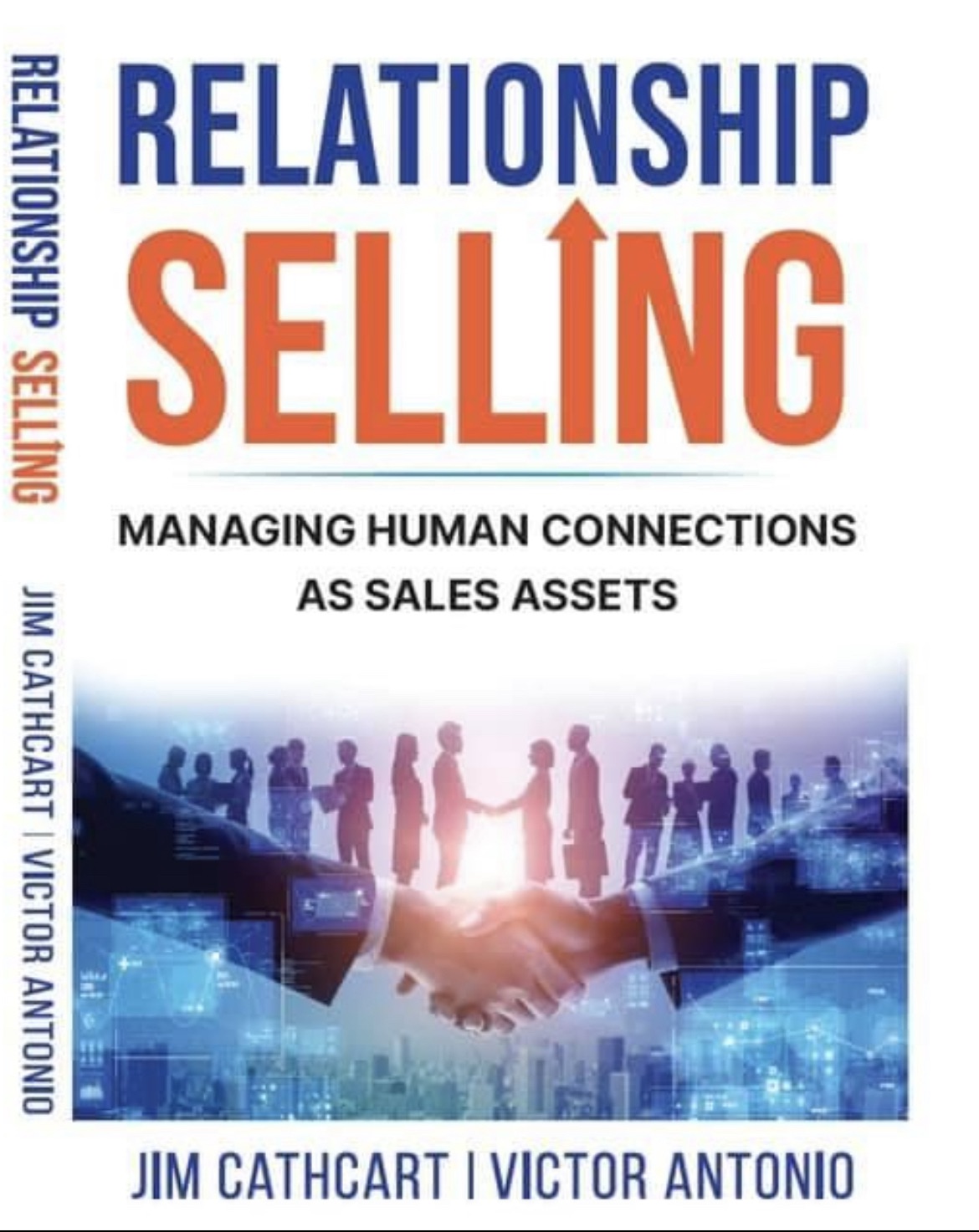
Relationship selling works the other way around. The relationship comes first. The sale follows naturally. And the career that results from it looks nothing like the transactional grind.
The Relationship Is the Asset
Here is where the thinking has to shift. Most people in sales view relationships as a path to revenue. A means to an end. Relationship selling asks you to see it differently.
"In relationship selling, you consider the relationship an actual asset that can be managed."
Think about that. An asset. Not a tactic. Not a warm-up exercise before the pitch. Something with its own value, something that compounds over time, something worth tending the way you would tend a garden.
When you treat the relationship as the asset, every interaction becomes an investment. You are not spending time with people to get something from them. You are building something with them. And that something, over years, becomes a clientele, not just a customer list.
"Selling gets easier every sale you make because the people trust you so much that they call their friends and say, hey, do business with this person. You can trust them. That lowers lots of the tension and the barriers to entry for selling."
The seed you plant today becomes shade for both of you tomorrow.
How the Process Actually Works
So what does this look like in practice? It is a sequence, and each stage grows from the one before it.
You start by "identifying the people you can best be of service to, who can afford to pay you." Not cold calls. New calls. You are looking for people whose needs match what you do well. That is a deliberate choice, not a numbers game.
Then you connect. "Connecting with those people so that you gain their trust in credibility." This is where you earn the right to be heard. You show up with competence. You show up with genuine interest. You listen before you speak.
Once you have earned that trust, you assess. You learn what they need, what concerns them, what they are trying to accomplish. You ask questions. You pay attention to the answers.
Then comes the part most people get wrong. Instead of launching into a pitch, "you offer a prescription for how to make it better. And you do this in dialogue, not as a monologue." The buyer is not your audience. The buyer is your collaborator. They are "talking with you and helping you identify the best ways you can be of service to them."
And when the prescription fits, when the trust is there and the need is clear, you "confirm the sale and then assure that they are satisfied now, and then follow up in such a way that you assure that they stay satisfied ongoing."
No arm-twisting. No last-minute pressure. Just a natural conclusion to a well-built conversation.
Prescription, Not Pitch
I want to stay on this idea of prescription for a moment, because it changes everything about how you show up.
A pitch is a monologue. You have prepared it in advance. You deliver it regardless of what the buyer has told you. It is about your product.
A prescription is different. A prescription requires diagnosis first. You cannot prescribe without understanding the condition. And you cannot understand the condition without asking and listening.
"Instead of a sales pitch, you offer a prescription for how to make it better."
When you operate this way, you are not a salesperson in the traditional sense. You are a diagnostician. You are someone who studies the situation, involves the other person in identifying what would help, and then recommends a course of action. "You do this in dialogue, not as a monologue, so that they're talking with you and helping you identify the best ways you can be of service to them."
The buyer becomes a co-author of the solution. And when people help write the prescription, they are far more likely to fill it.
Objections Are a Signal, Not a Stage
Traditional sales training devotes entire chapters to overcoming objections. There are scripts, frameworks, and role-plays all designed to handle resistance.
But consider this: if someone is raising objections, something has already gone wrong.
"An objection means things have gone too far in a negative direction. You haven't been listening. You haven't been involving them. Now, if they have concerns, that's different."
Concerns are natural. A buyer wondering about price, quality, delivery, reliability, or how this purchase will be perceived by others, those are reasonable questions. They belong inside the conversation, not at the end of it as roadblocks.
When you build concerns into the dialogue from the beginning, when you invite them rather than brace for them, the conversation stays collaborative. You never reach the point where the buyer feels they need to object. They have already been heard.
Trust From the Head and the Heart
All of this rests on trust. But trust is not a single thing. It operates on two levels, and you need both.
"You gain their trust in credibility, the trust of their head and their trust as a person, the trust from their heart."
The trust of the head comes from competence. Do you know your field? Can you deliver what you promise? Are your facts reliable?
The trust of the heart comes from character. Do you care about this person? Are you honest with them, even when honesty is inconvenient? Would you tell them not to buy if that were the right advice?
When both are present, confirmation is simple. The buyer already trusts your expertise and your intentions. The sale is not a leap of faith. It is a step forward together.
What a Career Built This Way Looks Like
Zoom out from any single sale and look at the arc of a career built on relationships.
Each year, your clientele grows. Each satisfied client becomes a source of referrals. Each referral arrives with trust already partially built, because someone they respect vouched for you. The work gets easier, not harder, with time.
"You've built a career that you can look back on not as a series of transactions and bank deposits, but a series of business friendships and big bank balances that put a smile on your face."
That is the compounding effect of treating relationships as assets. The seed becomes a tree. The tree bears fruit. The fruit contains new seeds.
So the question is worth asking: which kind of career are you building right now? One measured only in closes, or one measured in the people who trust you enough to call you first?
You do not have to close anything. You simply confirm what has already been built.
In the spirit of growth,
Jim Cathcart
Nurture Your Nature.