
The Gap Between Knowing and Becoming
When Someone Holds Up the Mirror
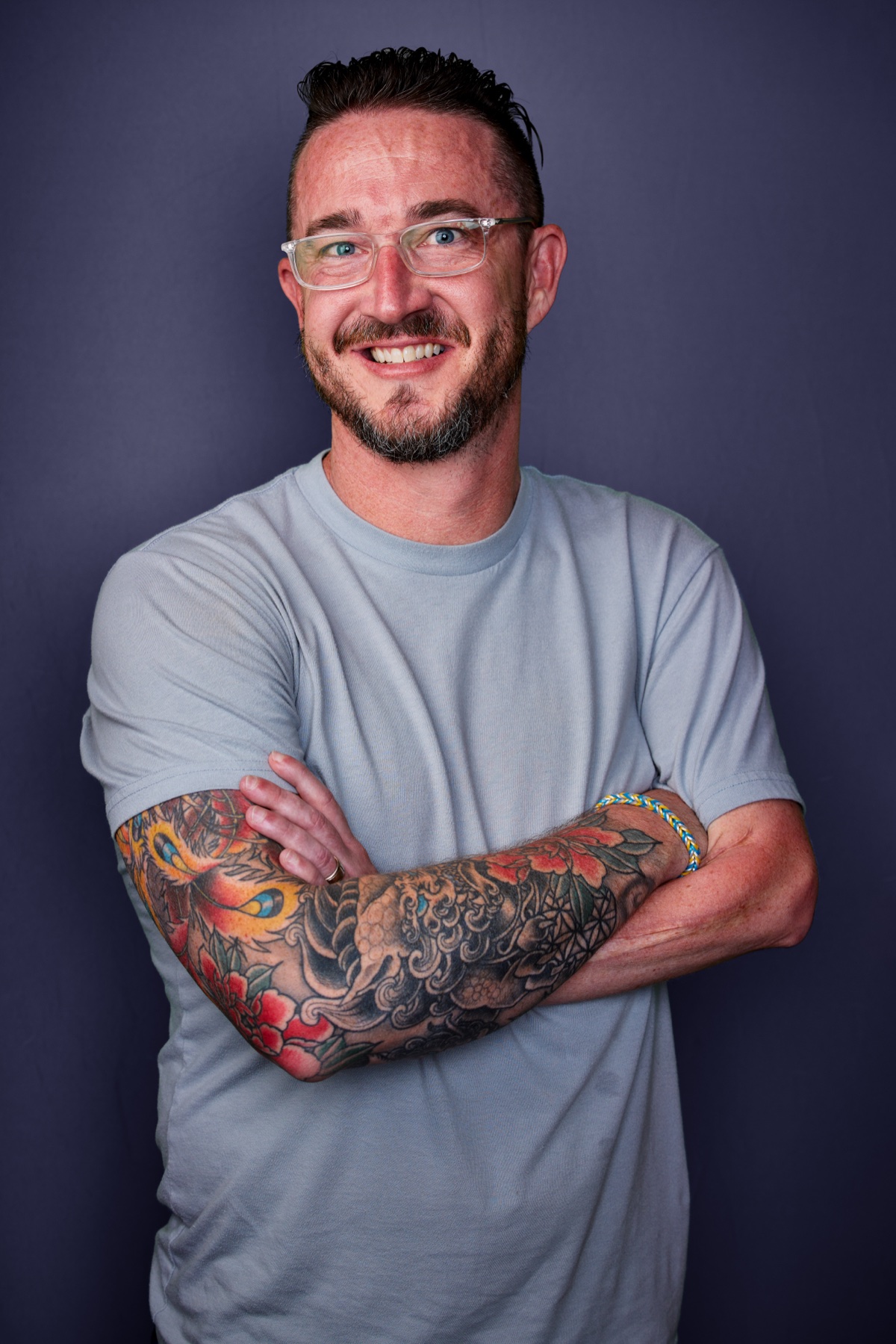
I sat down with Brian Bogert a few months ago. We had been working together on some projects, and in the course of that work, something happened that caught me off guard.
"What struck me immediately was his ability to see what I couldn't see about myself. He told me straight up, Jim, you're underselling. You're a much bigger product than that."
I have been doing this for over fifty years. I have sat across from thousands of people. And yet here was a man half my age, telling me something I needed to hear, with a kind of directness that did not sting. It clarified.
"That kind of clarity, that willingness to hold up a mirror without judgment, that's rare."
So I wanted to understand: where does that kind of seeing come from? How does a person learn to read others with that precision? The answer, as it turned out, started when Brian was seven years old.
A Seven-Year-Old's Decision
At seven years old, he was run over by a truck in a parking lot and lost his left arm.
Let that settle for a moment. Seven. A parking lot. A truck. And in the hospital afterward, surrounded by families of children who were terminally ill, children who would not get the chance to grow up at all, Brian made a choice.
"He decided he wouldn't be stuck by what happened to him, but moved by what he could do with it."
That is a pivotal moment in any life, and he was seven. Most adults have not made that decision with that kind of clarity. But Brian did. And the seed of everything he would become was planted in that hospital room.
I think about the acorn. Inside it is not just potential for one tree but for generations of trees. Brian's decision at seven contained the seed of the man who would one day sit across from me and tell me what I could not see about myself. The seed was already there. It just needed decades of growing.
When Others Write Your Story
But growth is not a straight line. It never is.
"Brian told me that for years afterward, people wrote his story for him. They didn't believe him when he told it. They looked to his parents for validation. They limited him with their own fears about what he couldn't do. So he became performative."
Think about that. A boy who had already decided to move forward, surrounded by people who kept pulling him back into their version of his story. They meant well. Most of them did. But their fear became his cage.
And so he did what many high-capacity people do when the world won't let them be who they are. He performed. He proved. He outworked everyone in the room. Not because he was driven by purpose, but because he was driven by the need to show people he was not what they assumed.
That kind of fuel burns hot. It also burns wrong.
A Full Bank Account and an Empty Life
"That drive got him to multiple six figures, to building a consulting firm to sixteen million dollars. But at twenty-seven, with a full bank account, he was empty."
I have met this person a hundred times. You probably know this person. You might be this person. The numbers are impressive. The resume is spotless. And somewhere underneath all of it, there is a hollowness that no amount of achievement can fill.
Because the achievement was never connected to who Brian actually was. It was connected to who he was performing to be. And performance, no matter how excellent, is not the same as alignment.
What Gets Shut Off Along With the Pain
Here is where the story turns. And this is the part that landed hard when Brian told it to me.
"At thirty-two, crying with his two-year-old daughter, he realized he'd shut off emotional pain along with physical pain twenty-five years earlier."
When Brian was seven and decided to push through, to not be stuck, he also, without knowing it, closed a door. He shut off the pain. All of it. Physical and emotional. And for twenty-five years, that served him. It made him productive. It made him successful. It made him wealthy.
But "protection guarantees disconnection."
You cannot selectively numb. When you shut off the pain, you shut off the connection too. He discovered that his shame and anger were filtering every conversation. His wife challenged him to show up fully. And at thirty-two, holding his daughter, the door he had closed at seven finally opened.
"He learned to have what he calls a strong spine and a soft front, unwavering in who he is without needing to justify or defend it."
That is not weakness. That is the hardest kind of strength there is. Firm in your identity, open in your heart. Most people have it backwards. They have a soft spine and a hard front. They bend on who they are and defend against anyone getting close.
Awareness and Intentionality: The Two Things That Make You Real
Brian built a framework out of what he learned. And when he described it to me, I recognized something familiar.
"He told me he's not talking about artificial intelligence, he's talking about awareness and intentionality. Without them, you're artificial. Awareness of what you don't notice, you don't use. Intentionality, the choice to think about alternatives and mean what you do."
I have spent decades teaching people to know their nature before they try to nurture it. Brian arrived at the same destination from a different trailhead. You cannot grow what you cannot see. And you cannot direct what you do not choose.
Awareness without intentionality is just observation. Intentionality without awareness is just willpower. You need both. "It's about surfacing the trash, the emotional triggers and beliefs that keep you repeating patterns." Not to wallow in them. To see them clearly enough that they stop running the show.
Closing the Gap
So what is the work, then?
It is not building a bigger business. It is not adding another credential. It is not performing harder for people who already have their minds made up about you.
"The work of becoming who you're meant to be isn't about the external wins. It's about closing the gap between what you know intellectually and what you actually embody."
Brian knows this because he lived both sides. He lived the side where the numbers were right and the person was wrong. And he lived the side where the person finally became real, and the numbers took care of themselves.
I think most of us know more than we practice. We know we should be present with our families. We know we should lead from who we are, not from who we think others want us to be. We know that the seed inside us is specific, not generic, and that respecting it matters.
The gap is not in our knowledge. The gap is in our living.
So I will leave you with the same question I have been asking myself since 1972. It is the question that changed my life, and it might change yours.
How would the person you'd like to be do the things you're about to do?
In the spirit of growth,
Jim Cathcart
Nurture Your Nature.