
What Kate Hancock Built Before She Ever Pitched a Publisher
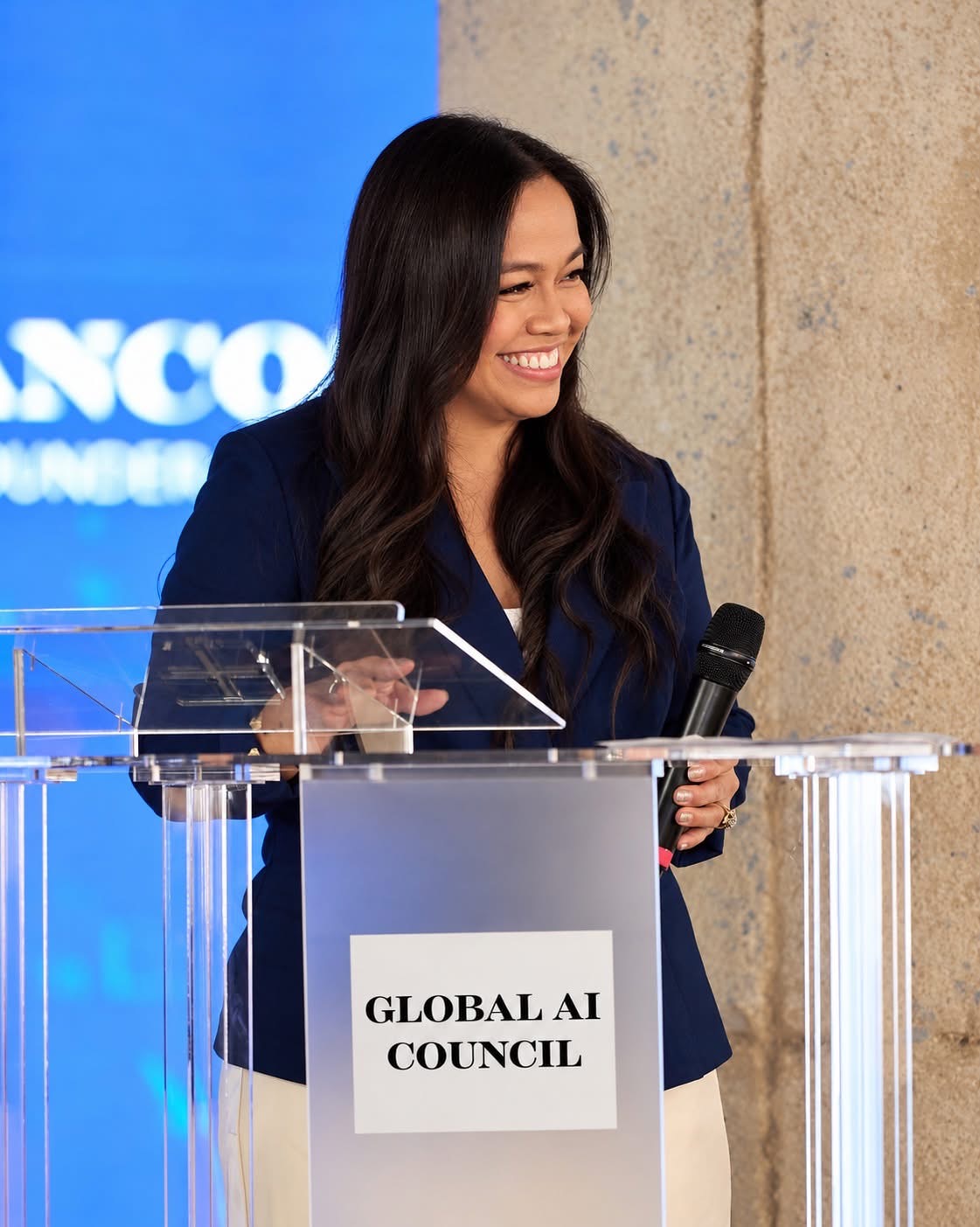
The Pitch That Worked for the Wrong Reason
Picture the moment. You walk into a meeting with one of the largest publishers on the planet. You have your book idea ready. You have rehearsed what you want to say about the content, the chapters, the message.
And they barely ask about any of it.
"When she pitched her book to Penguin, publishers weren't interested in her idea. They were interested in her audience. She had built something real first."
Think about that. The thing that opened the door was not the manuscript. It was the years of relationship-building that preceded it. Kate Hancock had done something most aspiring authors skip entirely. She had cultivated a community of people who already cared about her work, her voice, her perspective. The publisher saw that and said yes.
The question worth sitting with is: what had she been doing in all those years before that meeting?
Where She Started
Kate's story is not one of privilege finding its way to a bigger stage. It is a story of "her remarkable rise from a small village in the Philippines to speaking at the World Economic Forum in Davos."
She grew up on Camiguin Island. No electricity on the street. No indoor bathroom. The distance between that village and a stage in Davos is not just geographic. It is a distance most people would look at and say, that is not possible for someone like me.
I understand that feeling. I was a government clerk in Little Rock making $525 a month, and the idea that I would one day stand on stages around the world seemed equally unlikely. What I have learned, and what Kate's story confirms, is that the seed does not need to start in rich soil. It needs to be nurtured.
Listening as the Foundation
Here is something Kate figured out that most people never do. "Most people think relationships are built through talking, but they're actually built through listening. Real listening."
Not the kind of listening where you wait for the other person to finish so you can say your thing. Not the kind where you nod while mentally composing your response. The kind where you are genuinely trying to understand who this person is, what they care about, and what their world looks like from the inside.
"She's learned to be curious about people, not to impress them, but because she genuinely wants to understand them. And people feel that difference."
They do feel it. You know when someone is feigning interest versus when someone is actually interested. The difference is not subtle. It changes everything about what you are willing to share, how much you trust, and whether you want to continue the relationship.
I have spent 50 years studying how people connect. Curiosity is the root system. Without it, nothing else grows.
One Shift in How You Open a Conversation
Kate made this practical in a way I appreciate. She started "asking genuine questions instead of the standard 'hello, how are you?' That one shift in approach changed everything for her."
Consider your own patterns. When you meet someone at a conference, at a dinner, at a community gathering, what do you lead with? Most of us default to the pleasantries. How are you. What do you do. Where are you from. These are not bad questions. They are just automatic ones. And automatic questions get automatic answers.
What if you replaced one of those with something you were genuinely curious about? Not a clever question designed to impress. A real one. Something that invites the other person to tell you what matters to them.
That is a small adjustment. It costs nothing. And it changes the quality of every connection you make from that point forward.
Communities, Not Platforms
This is the part that made the Penguin pitch possible. "She didn't chase platforms for their own sake. She built communities of real people who cared about what she was doing."
There is a difference between having followers and having a community. Followers are a number. A community is a network of people who know each other, care about a shared purpose, and show up because the relationships are real.
Kate built across multiple platforms over several years. Not because she was chasing visibility, but because she was connecting with people. When the publisher looked at what she had built, they were not seeing a follower count. They were seeing an audience that would buy the book, recommend it, and carry the message forward. That is what real community produces. It creates roots, not just reach.
The Gratitude Question That Keeps Success in Perspective
Kate carries a practice with her that I find both simple and profound. She believes that "when you find yourself in an amazing situation, you should pause and ask yourself, what would the people from where I came from think if they were here instead of me?"
That is not guilt. That is perspective.
When you remember where you started, when you hold the image of that starting point alongside where you stand now, it does two things. It reminds you that the distance you have traveled is real and worth honoring. And it keeps you grounded in the awareness that your success is not just yours. It belongs to the chain of people and experiences that brought you here.
I think of this in terms of the acorn. The stem connects you to every oak that came before. Kate never cut that stem. She carries Camaguen Island with her to Davos, to the publisher's office, to every stage. That connection to origin is not a weight. It is a compass.
A Philosophy, Not a Formula
What I see in Kate Hancock's story is not a set of tactics you can copy. It is an orientation toward other people and toward your own life that produces results because it is genuine.
"Build genuine relationships, stay curious, do your homework, and remember where you came from. That's not a formula. That's a life philosophy. And it works."
I keep thinking about that little girl on Camiguin Island, remembering "the little girl from Camiguin Island who had no indoor bathroom, no electricity on the street." She could not have imagined Davos. She could not have imagined Penguin. But the seed was already there.
Your seed is there too. You might try this today: in your next conversation, replace one automatic question with a genuine one. And the next time you find yourself somewhere you never expected to be, pause. Ask yourself what the people from where you started would think if they could see you now.
That question will tell you something worth knowing.
In the spirit of growth,
Jim Cathcart
Live More Fully!