
About This Episode
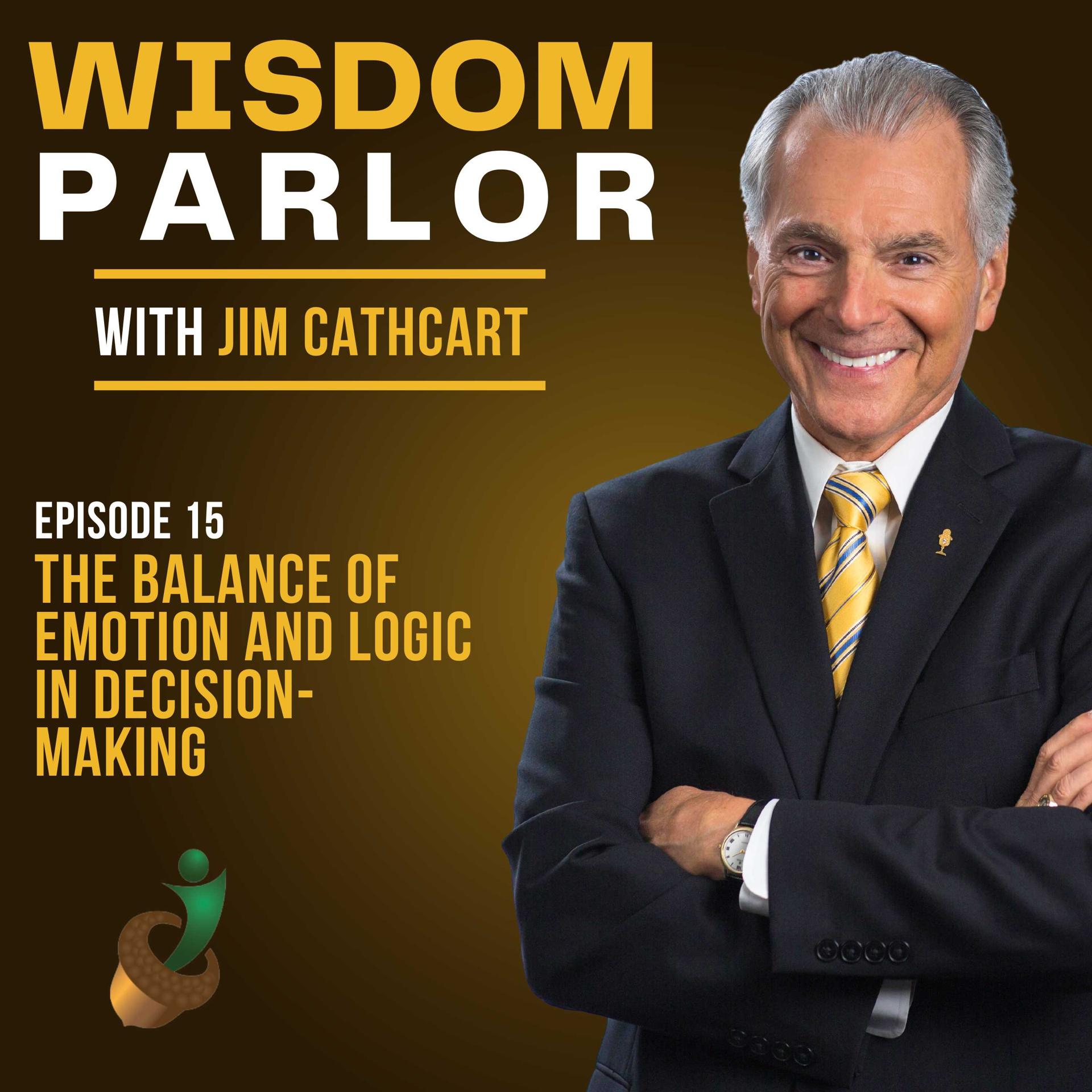
Have you ever caught yourself voting with your heart instead of your head? Join us to dissect the intricacies of group decision-making. Our spirited discussion cuts through the noise to get to the heart of rationality, especially when emotional currents threaten to sweep away clear thinking. As we unpack the impact of groupthink on everything from boardroom strategies to election outcomes, you're invited to reconsider the way every choice you make can ripple through society. It's not just about making decisions—it's about making them stick. The art of 'confirming' commitments in sales is a dance between logic and emotion, and on today's show, we redefine the concept of 'closing.' With a focus on building lasting partnerships rather than single transactions, we delve into how words can wield power and pave the way for critical thinking in sales and beyond. Listen as we share the essential strategies for maintaining customer relationships and navigating the delicate balance between rational appeals and emotional connections. But how do personal passions align with professional responsibilities? Today's conversation swings from the importance of mathematical aptitude in managing organizational finances to the harmonious blend of skills that enrich our personal and community lives. I'll share how my grandson Jason's love of math and music exemplifies the value of logical talent in all aspects of our lives. We also reveal practical tips for fostering meaningful engagement and motivation in volunteer efforts, drawing from my experiences with the National Speaker's Association. Tune in for a thought-provoking journey through the domains of decision-making, emotional intelligence, and the unifying power of mutual respect and shared vision.
About the Host
Jim Cathcart, CSP, CPAE is one of the top 5 most award-winning speakers in the world. His Top 1% TEDx video has over 2.6 million views, his 25 books are translated into multiple languages, including 3 International bestsellers. He is a Certified Virtual Presenter and past National President of the National Speakers Association. Jim’s PBS television programs, podcast appearances and radio shows have reached millions of Success Seekers and he is often retained to advise achievers and their companies. Even his colleagues, some of the top speakers in the world, have hired Jim to speak at their own events. Jim is an Executive MBA Professor at California Lutheran University School of Management and serves as their first Entrepreneur in Residence. He has been inducted into the Sales & Marketing Hall of Fame in London for his pioneering work with his concept of “Relationship Selling.” He is also in the Professional Speakers Hall of Fame and has received The Cavett Award and The Golden Gavel Award. Jim has written 25 books, hundreds of articles and he is always writing at least one new book. His most recent book is HI-REV for Small Business, The Faster Way to Profits . Audiences buy his books by the hundreds and he happily adds autograph sessions to his speeches. https://cathcart.com/ https://www.linkedin.com/in/cathcartinstitute/ https://www.facebook.com/jim.cathcart https://www.youtube.com/user/jimcathcart Tedx: https://www.youtube.com/watch?v=-ki9-oaPwHs
Full Transcript
Welcome to the Wisdom Parlor, a thoughtful discussion of important ideas among people who are committed to succeeding in life. This is a gathering of leaders from a variety of industries, and our role here is to help you reach the top 1% of your field of choice. I'm Jim Cathcart, so come with me and let's discover how much more successful you could be.
Welcome to the Wisdom Parlor. Great to see the two of you, Craig and Dennis Madden and Julie Donnelly, just connected to us. That's good. Julie, welcome. Glad to have you here. What we're going to be doing today, as we do with every Wisdom Parlor, is we're going to be talking about important ideas among interesting people. The whole point of Wisdom Parlors, to make it a parlor discussion rather than a course or a lecture series or a podcast interview or things like that. And of course, I. I do somewhat interview clients and colleagues who come in from time to time, and that's always a treat. But it's not an interview show. It's a place for us to talk about important things. And just yesterday, I was reflecting on the primaries, the election primaries, and not thinking about politics, but thinking about how people make choices that are important choices in their world or in their life. And one of the things that hit me, and I've seen this again and again in organizations where I've served on the board of directors. And Dennis, I know you can identify with board issues, there tends to be. When a group of people get together as a board, as a committee, as a country, there tends to be in each of those societies, regardless of size, a factor. I don't know what to call it, other than group insanity. It is just that people in groups tend to be prone to getting lured into a point of view, a mindset that makes this, suspends all the rational rules and makes doing what feels emotionally right more important than everything else. It's like, don't confuse me with logic. My mind's made up, right? I don't want to know the facts, and I'm going with my feelings. And why did I say that about politics? Well, it's not about politics. It's about how people make their choices. For example, right now in the country, we are faced with two undesirable presidential candidates, right? You could say, well, our things are. Yeah, okay, okay. We could talk about that all day. But generally, both of them are either too old or close to too old for the office, Right? They are polarizing when it comes to the nature of their personalities or the. The way that they make decisions and their Two points of view are almost diametrically opposite, Right. Yet when it comes down to voting, there are people who have said, my candidate didn't get elected and I refused to vote for the other candidate that remains in my party. Now, that's true for some people who are Democrats and some people who are Republicans and Independents as well. My candidate didn't get the nod. They're not the one going on the main general election ballot. And I refuse to vote for the other one. Okay, well, let's pause right there. Why would they refuse to vote for the other one? Because that person doesn't adhere to the general values of their right or left point of view. No, because that person personally seems distasteful to them. Okay. I mean, it's especially easy to say about Trump because he gives you the ammunition to shoot him with, Right? He goes out and calls people names and does, you know, childish seeming things that just kind of destroy any of the good that he might have done a few minutes earlier. But what that leaves behind is people who are either not going to vote or they're going to cast a symbolic vote and write in somebody that they know for sure for absolute certainty won't be elected. And they're doing it because they want their vote to make a statement. Okay, if a statement is made, who are you making it to? Who's listening? If you're making a statement with a vote in an election, any election, who are you making the statement to? The answer tends to be just to yourself, although they wouldn't agree with that in many cases because they hadn't thought that far. But if you're making a statement to yourself, aren't you saying, my vote doesn't matter, therefore I will not cast it? Okay, I've seen this in board meetings. I've seen where a popular issue comes up and the emotions of the issue, like, let's save the little baby seals, the emotions of the issue become the thing on the table and then it's time to vote whether we should build a new building in the middle of the interstate freeway to house the offices for saving baby seals, and we don't have a budget for it, and they vote in favor of this outrageous, unreasonable expenditure in order to say, I'm in favor of saving baby seals. Now, obviously I'm speaking metaphorically and absurdly, but I think you get the point. People seem so prone to considering that their voting, for example, is a statement to be made, a mark to be made in the sand or something like that, instead of something that will influence an outcome when the outcome is so important that there really needs to be a reconsideration of whether to vote or not to vote, who to vote, who gets your ballot. I was thinking if, if I were a candidate and I were one of the two remaining in the, in the general election in the United States, the way I would campaign is I would say this ladies and gentlemen, we're at a crossroads where your decision matters and it matters a great deal. The importance of your decision in this voting process is immense and could have generations long lasting effects. It's not important anymore whether you like me or my opponent. In fact, if you hate me or my opponent, you should still cast your vote because one of us is going to be elected and the things that that person does will directly and profoundly affect you. So don't vote for the people you like or dislike. Don't vote with your mask. Don't even take your emotions into the voting booth. Sit down and let your rational mind make a choice for the likely outcomes of one of us being in office or the other and then go into the voting booth and cast a useful ballot. That's the way I would campaign. Without getting into discussing the personalities in the race. Give me some feedback on that concept.
I think that the biggest problem is is that we don't have maturity based mindsets and maturity based rationale logical thinking like you said earlier in a way correct. And people are carrying out decisions and actions based upon how what I would say my generation, Gen X has failed to use critical thinking skills to make decisions. More decisions are being made based upon popularity versus rational logical what I would consider Judeo Christian morals and values. And so people, because they don't have a rock solid foundation in how they were raised, they don't know how to make rational logical decisions and take the emotion out of it.
Yeah, that's the thing. And it has everything to do with the practicality of life, with rational decision making with our school system has, has failed us in that or we failed it or whatever. But it's non functional in the role that it used to play and needs to play even now. And that is teaching people critical thinking, teaching people how to go into an unfamiliar situation, observe it intelligently, determine what action or inaction is indicated and then behave appropriately. Instead what we're doing is we're allowing concepts to rule. Like if you look back at society at the top of the COVID pandemic, just as we were going into Covid there was a huge upheaval from the radical left I guess is the Best way to characterize it of people that were against everything that made sense. They were against paying rent or paying bills, they were against obeying laws, they were against police, they were against whatever. And they rioted in places like Portland and Minneapolis and George Floyd was there. That their symbolic reason for rioting. But when it came down to it and you studied it, that had very little to do with it. It had a whole lot to do with expressing anger and defying authority and burning down police stations and establishing fiefdoms in urban areas with barricades at each end and just a whole lot of completely unjustifiable behavior right now. Dennis, that's no fair. You brought in cuteness factor. That killed the whole meeting, all of our attention. Look at that adorable child. Who is that?
That's Sammy.
Wow. Well, hey, Sammy. Hi. Poking her head around the door. Oh, well, that was beautiful. That. But anyway, see what I'm talking about? There was no rational thinking and all that. It was all expressing emotions. Like the people tearing down statues that were put up to acknowledge bravery because the people that that statue represented probably did things that today wouldn't be accepted. They weren't put up today. And we're not saying we approve of their other behaviors, you know, for heaven's sakes. Anyhow, Dennis, you were going to make a comment about rational.
I was waiting to buy to it.
But I.
But I do have a comment. I think another part of it is the discomfort of being wrong. The ego, that's part of that. You know, I learned to be very comfortable being wrong and I learned a
heck of a lot more. Yeah, if you seek situations where you could be wrong, knowing you're going to survive them, then you're going to advance more than the people who don't. But it's like I was saying on a webcast the other day, we were talking about protectionism. You know, how some people, they won't take any risks and other people do. I said, yeah, when you put up the walls, the barriers that when you withdraw and make your life smaller and smaller and smaller, you may be safe, but you will not be living. You will be miserable and your life will become so small as to not be satisfying or meaningful anymore. So there's safety behind those barriers, but there's no life behind those barriers. You're safe until you start living again. And then that'll involve some risk. But let's drill down on what you were saying, Dennis. If someone's uncomfortable being wrong, that's a self esteem issue. They think if they are Wrong. They're not okay. And that puts them in danger somehow, you know, either reputationally or physically or whatever. That's right.
Well, you see, we all think we're right, don't we? I mean, you never hear someone saying, you know what? I'm not very smart and my opinions really are terrible. I would recommend that you don't listen to a word I say. You don't ever hear that, do you?
Rarely.
Yeah, we, you know, we've all heard some of the most absurd perspectives and wonder, wait a second. Where did you get your information to arrive at that conclusion? And yet this person is passionate about, you know, where they're headed with this.
Yeah.
Boy, if you want to go someplace to see a lot of that going on, go to X and spend a little time there.
Really? No, it's a direct. Yeah, yeah.
Twitter. Yeah, it's a. Wow.
I don't go there often, but I go in occasionally and do a posting. And when I'm there, of course, I get drawn into a few of the postings. And you're right. I mean, if you want to see a bunch of emotional teenagers talking about how their feelings are more important than the reality of Earth, that's the place to go. But I've been in, and I know you've been in, because we've shared dialogue about this. Board meetings and committee meetings, where a point of view will come up, and it's a totally symbolic, emotional point of view that has almost no rational underpinning. And then the group gets caught up in sympathizing with that, and nobody wants to take a stand contrary to it. And you get down to a decision, and the decision has serious, profound, hard implications, like it's going to lose us money, it's going to destroy our reputation, it's going to whatever. And yet the people seem to get into groupthink and go with that. Man, that's scary.
Well, I will be suffering from that. This evening. I have a board meeting. Yeah. I'm the vice president of the Museum Guild here in Henderson, and so me and a couple of other people had gone through the bylaws, and there's some stuff that just didn't make any sense having to do with elections. And I. I put my comments down on it in a document and sent it out. And one of the gals there who had been president a few times said, dennis, you just don't understand how it works. So.
Okay, well, we'll.
We'll be talking about that this evening. And I. And I'm sure there's going to be some emotions attached to it because yeah, it doesn't. If it's deemed as not working very well, someone put that together and there's likely to be some hurt feelings. So I got to be very careful, by the way.
And here's a ploy you might want to use. When someone says you don't understand how it works, you say, I do understand how it works, but I don't understand how it's how happens. The way it happens most often seems dysfunctional. How it works, meaning that it happens and then the, the results are good, reliable, dependable, profitable. That whatever the positive is, you know, that's different. Because if something works, that means it operates the way it should operate. The way committees and boards happen or behave or act is often not a way that would work for its intended or assigned purpose. For I was a member of a mastermind group called Speakers Round Table. And I was in it for 29 years. And speakers roundtable is 20 and always only 20 or less of the top professional speakers and experts in the world, most of whom members of the National Speakers association, though that's not a requirement. And so these were self made millionaires and multimillionaires and famous best selling authors and celebrities who had banded together as a mastermind group to help each other grow and have a happy life. And we would get together two, sometimes more times per year and spend our time just doing everything we could to help each other succeed. And one of the things that we ran into from time to time was we would have a member either retire or pass away or something. And so there'd be an opening for us to bring in another person. And sometimes we'd have two or three openings. And every time we talked about who the candidates would be, and by the way, you couldn't apply, you could only be recommended. So this was invitation only group, very intimate group. We all knew each other and knew each other's spouses and families and you know, so very powerful bond. The only way you could get into it is one of the members, it recommends you and then the group invites you. And so each year we would have a four day meeting and at the beginning of the meeting we would acknowledge whether we had an opening or not. And let's say we had three openings. So we've got 17 active members, three openings. We would vote at the beginning of the meeting how many of those openings to fill. And we realized that filling all three of them at once created too much change in the nature of the group. And it really disturbed things For a better part of two years before it settled back to where it was. And so kind of self imposed rule without being written was two is the most we're going to invite in any given year. So we would, we would make that decision, we're going to invite two. And then we would get into a discussion as to who those two would be. And then when we would get close to voting, of course the people that were recommended were almost always appealing. So we liked everybody that was being recommended. And there would be, let's say four that we think, man, it'd be great to have any one of the, or all of those four in our group. Okay, we're going to vote on the two we're going to invite and you do the ballot and you find that there's no consensus. The group would always, always, always have somebody step up and say, well why don't we change our decision on how many and just accept three this year. Oh. So instead of making a decision they would just expand the parameters. So what I had to do year after year after year was remind the group that rational and emotional don't. They're not good bed partners. Right. So our rational decision is how many people do we want to invite and is that practical? And so let's say at the, at the start of the meeting we say we're going to invite one. And here's the, the rule that I kept asserting that we keep in place after I finally got them to agree to it. If we choose on day one, how many we're going to bring in this year we vote on day four. So we choose on day one and we vote on day four and we do not revisit the decision on day one. So there's one opening. We got four great candidates and we're on the last day of this meeting. What are we going to do? We're going to make a good decision. Well, yeah, but I'd like any one of the four. Yeah, but you have to choose. Ah, but I don't, you know, I don't know. I'd be getting it step up or step aside. And we found that every time we did it that way we made better decisions and we love the answer. The final person that we ended up with a couple of years when we did the other way, mixing emotional and rational into one, we ended up with some members we had to uninvite later on because they just didn't fit the group or we invited somebody who didn't really want to be in the group though they would have been A good fit. So by separating those two, rational and emotional, we made better decisions. How do we get people to make better rational decisions when we know there will be an emotional factor when it comes to the final choice? How do we get people to a better decision without letting emotions destroy rationale?
I'm not sure you can.
That's exactly what I was just thinking.
You know, if it's a group of four or five people, that might be one thing, but when you're talking about an entire country or some large group. Holy Toledo. That's.
Well, how do we do it in a more within our grasp level in committee meetings and board meetings that we're part of, whether it's a local homeowners association or sitting on a museum board or. Or being president or on the board of the National Speakers association or in a mastermind group? How do we get the group knowing it's vulnerable to the same thing, to intelligently and maturely separate the. The rational part from the emotional part long enough to be sure they're making mostly good decisions?
I think we have to put it in a context where we have to. That kind of like golf. Right. Where you set the ball on the tee. Right. And then you may have to adjust the ball on the tee or adjust the tee. I think it's a similar thing where we have to prepare the people to have the ears to hear and to set parameters where they don't know that parameters are being set because it's done in a way that is cautious and mindful, if that makes sense.
Yeah. And it feels respectful to the people that are involved. Yeah, that's. That's a key, I think, is that we've got to cause the participants to. To feel like their point of view or their position is being at least respected or acknowledged. Because if they feel disenfranchised, then they're just going to look for a way to assert control, whether covertly or overtly. And yeah, I would say that's the
biggest problem with leadership in companies nowadays.
Yeah.
Is you have people in authority that are not mature enough to be able to handle pushback.
Right.
I mean, I. I got out of that in a company that I was with for about 15 months where the chief revenue officer wanted blind obedience. Basically, he wanted to hire a bunch of puppies.
Yeah. Right.
He did not want people with critical thinking skills to push appropriately, push back so that both edges of the sword get sharpened.
Right.
Where I love Scripture, where it says,
you know, iron sharpens iron, one man sharpens another. Right.
Right.
And I Find that when leader. People in leadership don't want that. They're not leaders.
Yeah.
They want blind obedience. And then they wonder why in business, over 68% of companies never hit their forecast and why out of 33 million companies, only 6.6% ever hit a million in revenue.
Yeah. You know, when you look at it that way, it shows you something also about sales and negotiation. Because in a negotiation, you know, you're going back and forth comparing points of view or positions that. That each person has taken, and then you come to a point where a choice has to be made. A lot of times a negotiation cannot be confirmed or committed to the conclusion until somebody gets a way of feeling right or saving face or something that has nothing to do with the outcome. In courtrooms, you see it all the time. Well, I just wanted him to say he was sorry, and he never said it and never meant it. Okay. He hadn't done that. So what do you want instead? $15 million. Okay. You know, and the jury agrees emotionally with the person, and this huge judgment happens. And it's all because Jim wasn't. Wasn't willing to step up and say, I'm sorry, I was wrong. You know, which goes back to Dennis's earlier comment about admitting error or being willing to be wrong. If you look at selling in sales, the sales decision is made typically made rationally. The sales commitment is made emotionally. So I take you through all the features, advantages, and benefits, and I show you this whole presentation, and I get you to feel the effects of having made a good choice and saving the money or getting the new benefit or whatever this sale is going to bring to you. And then we get down to the point and I hand you a pen and I say, so, let's get started today. Okay. Up to that point, it's been a thinking process. It's had some feelings mixed in, but for the most part, it's been back and forth guiding you through a thought process. And maybe this is the smartest thing in the world to do for you to do. And maybe it's really urgent and you should act. However, that doesn't mean you're going to, because at that moment, when I ask you to commit, that's where you go through all that rationale in your mind, and then you check with your emotions to see if your emotions agree. Yes, we should go ahead, because I don't. I really don't think we control our emotions. I think we can inhibit our emotions, but our emotions kind of have a mind of their own, you know, so.
So what you're saying is if. If you don't like someone, you can still be polite, but you still don't like them.
Right, exactly. That's a good point. Yeah, that's. That's.
Well, one of the things as well is we have lost. We have lost the meaning of the word dislike.
Right.
And. And that goes back, what you're saying there. Just, we can dislike something and still be respectful whether we like it or not. And that has been lost.
Yeah. I tell you, I disliked paying $10,000 to replace my water heater. I really disliked it, but I did it. It wasn't just the water heater. I got one of those waterless. The heater.
Yeah.
So it was. It was a fairly involved application, but still, you know, I disliked making that decision. But I was, you know, I went through the whole thought process. I looked at it, looked at my options, thought about, okay, how long is that going to last? And will it have the danger of a flood coming through my ceiling someday by surprise or not, etc. I went through all those things, and then when I got down to it, I said, reapers, that's a lot of money. And I'm thinking about it, and the guy said, well, you could pay half of it now, and then, you know, the other half, we could finance it over two or three months. And somehow reducing the size of the initial check, even though it didn't reduce the expenditure, softened the blow enough that I was willing to say yes. And so I bought it on a few payments instead of buying it with one check. And not that I had to, but it's just felt less painful doing it that way. But when I'm doing sales training, I teach the salespeople that, first off, you don't close sales because nothing shuts. The word close, if you look it up, means shut, to exclude, to finalize. Right. So cases closed means it's over, you don't have to deal with it anymore. Well, no wonder salespeople typically don't follow up. They close the sale, and if it's closed, it's closed. Right. And we say things like, well, he had a closed mind. Is that a good or bad thing? What's a bad thing? What does that mean? Not permitting new information in. Okay, so if a person's mind is closed, that's not a good thing. If the case is closed, that indicates that it's over. If the. If this is a closed market means nobody is welcome. If the person says, I'm sorry, we're closed, that means, go away, leave me alone. You're not going to get helped here, at least not today. So in every case where we use closed, it indicates finality or exclusion, okay? So in selling, when we talk about confirming a sale and beginning the delivery of the service and the payment for the. For the privilege, we call it closed. There was a wrong choice of words made probably two generations ago. What we want to do is confirm the sale, okay. When confirming a commitment to buy, what you're doing is making it official and beginning your commitment to them and their commitment to you. They're committing to pay, you're committing serve, okay, or provide. So you're confirming the sale, not closing it. Now, if that's the case, then all of those combat tactics that you were taught in sales school or inappropriate tactics, you know, like the hat and hand clothes, the, the half nelson clothes, the sharp angle clothes that reduced to the ridiculous clothes, the, you know, all of those things that were taught in the little closing books. Overcoming objections, not answering objections, not addressing concerns, overcoming objections. So it was all about combat, and the salesperson wins, right? Instead, it ought to be selling is a helping profession. We help people for pay and we guide them through the decision process. And so when I taught them, when I teach them selling, I teach them to look at the confirming fades as one where you summarize all the benefits and then you negotiate any of the concerns. Addressing, you know, like, that's too much money or I'm not sure it'll last, or I heard bad things about your company or I don't know you, or do you really get who we are and what we need or, you know, whatever all those things happen to be that don't have approval yet. I'm going to have to run this by X, Y and Z to get approval or a stamp or something. All of those things can be addressed in a logical, rational dialogue. And then you ask for the commitment, but you ask in a way that's sort of seeking permission to bring benefits, seeking permission to be of service, seeking permission to get going with it because we're talking about a great thing. Instead of beating them up until they can't say no, any anymore. And they finally say, all right, all right, I'll buy. Well, you didn't build a friendship. You created an adversary. You built a victim. Right? Yeah.
They just wanted to escape.
Yeah.
So
with, I'll buy, right? And then you say, and Dennis, you know, we build our business on referrals. So get your Rolodex. Remember the old days of Rolodex? Get your contact list who do you know who you know? And then Dennis says, I'm not going to give you any names. Why? Because I'm afraid you'll do to them what you just did to me. So that. And it's all about managing the emotional factor. If you. If you handle the rational part, it's going to be easier to get the emotions to hop on board. If you don't handle the rational part, then it's all going to be about keeping them either angry or concerned or feeling victimized or whatever it is. You know, like, Black Lives Matter implies that many, many people and systems and things don't believe that and are geared against them, and therefore they need your sympathy and support. Okay. You know, you could say children matter. Well, and on all these subjects, you would get agreement. Sure. Black lives matter. Other lives matter. Children matter. You know, veterans matter. Police matter. You know, all. So whatever the item is, that's got an emotional hook. If you can build the rational case first, then you're not dependent on the emotions. If you don't, then the minute emotions subside, your cause falls apart. And you've seen that in movements like Occupy Wall Street, Black Lives Matter, all those other things over the years build to a crescendo. And because they didn't do the. The rational, logical, systemic, practical work behind what they were doing, once they hit that crescendo is kind of like, yay, we won, Then the game's over. Okay, everybody go home. Be careful in the parking lot. Right. And that's pretty much it. Wow. Wow. So I think we need to popularize rational critical thinking once again and make it cool to be the person does that.
That's pretty cool.
That is.
Yeah.
You know, and I was thinking as you were talking about that, you know, words matter, confirm. A sale is quite different. And I was just, you know, rolling that around in my mind as you were talking about it. It's such a different approach. You're not as defensive when you think of it in those terms.
Right.
So, you know, when I go to the meeting tonight, I've thought this over long and hard. I've got, you know, I want to focus on the outcome and what the objective is or should be and get some buy in there.
Yeah.
And I think you're 100% correct. I'm going to hopefully be able to avoid the emotions tied with some of our policy.
Well, I think that's the right approach because outcomes are or the reason we do things. And if we're doing something simply to make a statement, we need to ask who's going to read this statement? Who's going to hear it? Who's going to see it? Who's going to care? Well, people is too big. We're not going to reach all people. Which people are. We're going to reach, well, you know, the people that care about. Let's please help me find something I can photograph. Help me find something tangible, something real. Because just generic statement making is the quickest way in the world to lose a fortune, kill a reputation, ruin the circumstances. Right. I could rant about that for a long time, but I've been frustrated. Like one time, I've been frustrated in board meetings with things like this one time I was in a board meeting and I had done five years of work to create a professional certification process. This is National Speakers Association. And I had been assigned the duty of coming up with our professional educations structure so that we could certify speaking professionals and have a reliable and respectable system for that certification. So I did my five years of research, had a team of people working with me, you know, went way outside of our own profession, looking at others and studying their models, and came back time after time to our board of directors and finally presented this big, thick document with rationale and all that, and said, all you need to approve is this part and all the rest of this is just to prove to you that that top part is solid. And someone said, well, it looks like an awful lot of work. And I don't, I don't. I said that. Not an awful lot of work. I've done the awful lot of work. I'm simply providing you the documentation. So let's do it this way. And I thick part and set it aside and I put the thin part there. And I said, that's all I'm asking. The rest of it was just to make you feel good. And it didn't. So I'll hold that in reserve for when you worry about it. Well, okay. But, you know, I. I don't know. And somebody made an objection. That was just one of those, I don't want to deal with this. Let's brush it aside. You know, it was some. They made some kind of a tabling the motion move. I objected to that. And one of the board members said, jim, I think what. What he's saying is it just needs more study. And I stood up and I said, no, it does not need more study. Here's the study. And anybody, if anybody was going to study it more, it would be me. And I've done that for you. If you want documentation, I'll walk you through the study. That's been done. But now it's time for a decision. And it needs to be a decision that is not good for what makes you comfortable, but good for our association and our profession. And so a silence fell over the room. Dang. Jim got emotional. Yeah, but Jim was getting emotional in support of the rational right. And so finally they made a decision. And after five years, they finally said, okay, we're making this official. And that changed a lot of things going forward. Here's another manifestation of that. There was the man who was an officer in the Civil War. His last name was Robert. Not Roberts, but Robert, like a first name, but that was his family name. And he was frustrated that meetings weren't run in a way that was fair to the minority, that everybody got heard, that was respectful to the will of the majority, and that allowed every relevant point to be laid on the table. And so he wrote Robert apostrophe s Rules of order. So Mr. Robert, who coincidentally is like a grand uncle of the founder of the National Speakers Association, Cabot Robert, whose statue is right over there, the statue of him is given as the member lifetime achievement award for the person most like our founder. Anyway, Robert's Rules of Order became, because it was so well done, the worldwide standard for running meetings and conducting Congress. And even in courtrooms, they follow to a large extent, Robert's Rules of Order. I've got it back here on the shelf now. Parliamentary procedure. Robert's Rules of Order, revised many times over the year, is something that people are aware of but intimidated about because it seems so complex, because you've got things like, you know, to fix the time of the meeting, to adjourn, to. To question privilege, to call for orders of the day, to rise to a point of order, to postpone indefinitely, to reconsider, things like that. He built all that into it. And when I was in the JC is the Junior Chamber of Commerce jcs. This was the Chairman's Planning Guide, Share the chapter, President's Handbook and Chairman's Planning Guide. And it has in there Robert's Rules of Order in a simple format so that chapters can use it to run board meetings and committee meetings. So I carried around with me this. And this is not just in the jcs, but also National Speakers Association Parliamentary procedures at a glance, and this is an old document, Dennis, this puppy's been around for. I don't see a copyright on it, but you can bet it's been in existence for a generation. Here's the Point of it all, how do members of this group get their say? How do they get their say? They make motions. And this shows what are the kinds of motions. And here's a. What do you do when, you know, simple outline of those things. Now, the reason I bring that up is that of the many, many boards that I've served on, most, if not all of them have resisted strongly learning Robert's Rules of Order. Now, if a person knows this, they will almost insist that it be used because they realize it's the best possible method to make sure that if you've got no power, you're going to be heard anyway. If you are in the majority, you're going to pass whatever it is you're in favor of and it's going to be ruled. You know, go with the majority rule. So if 51% or more vote for whatever it is, it's going to pass. If 60%, it's a mandate, you know, etc. That kind of thing. So here's what the boards do is they elect a couple of new members of the board and they don't know parliamentary procedure. And the old timers on the board, maybe they know it, right? So they've been using it happily for a few years now. Few new board members come in, they're not familiar with it, and they say, hey, you know, I would make a motion and do all this, but I think we need to form, we need to establish a bylaw that we will follow Robert's Rules of Order, except when something is more important than needs to be decided. They don't know what they're talking about. And so they think this stands in the way of doing what's right, what's compassionate, what's fair and what's reasonable, when in fact, this is a structure for doing what's right, what's fair, compassionate and reasonable in the most efficient way. So it goes back to why. Why don't most boards, committees and organizations use things like this anymore? Because it's not being taught. Because it's not cool to be rational. So we got to make it cool to be rational again. Cool to be a practical decision maker. Cool to know math, for heaven's sakes, Right?
And count back change.
Yeah, I'm sorry, I can't sell this to you right now. Our cash register is broken. The register broken? No, the computer's down. So you owe me 37 cents. Yeah, I'm not good with math. I literally had that happen. And that was the manager. Oh, wow. In a movie theater in California that Was the manager.
That's terrible.
Yeah. Yeah. And it's also dangerous to the business because you can bet they ain't going to be making money if that person's in charge of the till. Who's going to decide on what quantities we should order and keep in stock and what's too much and what's too high of a price per whatever to be spending? Right. They don't know. Yeah. You know, I'm not good with math. Yeah. Here's a word you could use. Take that home with you and work on it. The word is yet come back when you're good with math.
Right, Right.
By the way, my grandson Jason, who you've met, Jason aced his SAT math, got 800 on the math portion of the SAT and for the last four years has been teaching at Math Nasium. He's a math tutor. Wow. Yeah. Among other things. So thank heavens I've got a person that's good at math and logic and rational thinking in the family. And at the same time, he's good at music.
Ah, there you go.
Yep.
Yeah. Math was always my favorite.
Now there you go. I enjoyed math until I got a bad math teacher. Oh. So in high school I was great all the way through plain geometry because I liked that teacher. And then I got to algebra and I didn't like that teacher and I kind of lost interest in math. Wasn't because of algebra. It was because of. What was his name? Coach ends, Wing Ensminger or something like that. The guy that was teaching it and just the way he taught was too authoritative and. And kind of uninteresting. And so I lost interest.
Yeah, I could see that.
Yeah. The same thing happened in chemistry, by the way. Oh. Hit a creep of a chemistry teacher. They're out there. You have it. That's right. So what. What can we draw as sort of a conclusion from the. All this dialogue around rational, emotional, and how it applies to sales and politics and voting and board meetings and committee meetings and running businesses and. And so forth. What, what do you draw from this, Dennis?
Well, I'm going to use my example of this evening, and I'm going to do this with intent, and that is to get buy in on the outcome. And I'll give you some specifics. It has to do with the election process, which in my view, view is horrible. But I'm not going to say I'm not going to use that word or anything close to it.
No, you know, the.
The is not the objective.
Right.
The objective is to get more people interested in serving on the board and getting more people interested in joining the guild. That's what we're after. And so how do we do it? I have an idea. Or guess what, you may have a better idea. Yeah, this, this kind of how I'm going to approach it.
Well, by the way, years ago when I was installed as president of the National Speakers association, we had about, we have Today, I think 30 chapters or something like that. There was a gathering of the chapter leaders and I was addressing them as the new president and they said, hey, will you come to our chapter? I said, yes, but I have a rule in my office. Since this is non paid volunteer professional work, not paid mainstream business work for me, the rule for me and my staff is this. First we eat, then we nsa National Speakers association, in other words, then we do our volunteer work. And they said, what do you mean? I said, well, the first thing I've got to do is pay the bills and pay the staff. Once we've done that, I'm available to come to any of your chapters. But if it comes down to a choice between speaking for free at your chapter meeting and speaking for a large fee for a corporation, I'm going with the large corporation. And they said, well, so would I. Okay, all right, we're in. I said, all right. I said, I'll at least give you a 30 day window where I can guarantee you I'll be there. And they said, all right, good. I said, now what are your questions? And they said, how do we make the successful professional speakers in our area come to our meetings? I said, item one, you don't. Please don't try. Because if you're trying to make force require coerce people to come to your meetings, you've got the wrong motive. People go to meetings for two reasons. And this is true tonight, Dennis, for your group, people go to meetings for two reasons. Because that's where their friends are or because they think they'll get something they value. Well, we are valuable. We offer a lot of value. Excuse me. Doesn't matter what you value. What matters is what they value. Will they find it valuable to participate in your group, to attend your meeting, to serve on your board? If they don't find it valuable, then you're not serving them, you're asking them to serve you. And I think it needs to be a mutual, a win win service. So the other part of that equation is they go where their friends are without motivation. You don't have to remind them or anything. People will go where their friends are. Well, we Are their friends. Do they consider you their friend? Well, we're. We're being very friendly. Yeah, I know. That's not what I asked. Do they consider you to be their friends? Whether business friends, social friends, or context friends related to museum interests? Right. That's a categorical friend, you know, social friend in a specific niche. Niche. If we really get to know people, we will find out what they consider friendly and how their friends, in their mind, behave, and then we can go and do likewise. If we find out what they value, then we can look for ways to provide that kind of value. Some people serve on a board because it makes them feel important. Some people serve on a board because they feel like they're doing something that matters. It's a cause, a commitment. It's a movement, a crusade for them. Right. Okay. Some people serve on a board because they like to hang with these people. It's sort of like being at the big kids table, you know, being in the end crowd. Right. Some people serve on a board because they like the other people on the board. Some people serve on a board because they feel like if they don't do it, the other people are going to lead it in the wrong direction. So they're there to make sure that the ship doesn't run aground. Some people serve on a board to learn, to grow, to advance in their own life, mind, or career. So there are many, many reasons that people serve on a board. Some people serve on a board symbolically to represent another person they care about. I'm just watching out for Janie over here, because if you guys do X, then it's going to hurt her and her business both. So I'm here to stand up for little people like that. Right. So why do they serve on the board? Well, the board that you're going to talk to tonight, how many people on it?
There are seven.
Okay. And seven different reasons for serving on the board, which overlap. I'm sure some of them serve for very similar reasons, but seven different reasons for serving and seven different reasons for being part of the guild. You know, some are fascinated by science. Some are committed to preserving antiquity. Some are. Are moved deeply by art. Some are, you know, I mean, there's so many different reasons a person would be involved in that kind of an endeavor. So people go to meetings and. And participate in things because that's where their friends are and because they get value from it. And if we can figure out what those two things are in them, then we can morph our own actions to appeal to that. And we'll get more of them involved. But if we ever make someone serve, shame on us.
I agree.
Yeah. Yeah, that's cool.
As a matter of fact, that. That's kind of how I. I got this position. I was. I don't want to say coerced, but, you know, lured. Come on, Dennis, do it. I'll help you out.
Pressure is a. Is a factor. Yeah. And.
And I think there's a better way.
Yeah, you could. You could also guilt people into it. What? You don't care about X. You know, you don't care. Yeah, well, what kind of person are you? Oh, no, I care. We'll show you care. Step up. Serve on the board. Here, sign this. Sign this agreement to serve for 17 years. What? And by the way, our board needs to be the first to step up to support the. The guild. And so we expect out of you a X thousand dollar annual commitment. Yes. Yep. Okay, folks, that's today's menu. Dennis, I'm going to Hang on. Thank you for tuning in, folks. Every Wednesday. First Wednesday of the month is Wisdom Wednesday. Wisdom Parlor, 2pm Central Time, noon Pacific.
Thank you for joining us today in the Wisdom Parlor, a thoughtful discussion of important ideas among people who are committed to succeeding in life. If you are committed to making more success happen in your own life, go right now to my website, free.cathcart.com and download my free ebook and then watch the video. If you decide that you'd like my assistance in helping grow your success, then k, come with me and let's discover how much more successful you can be.
Nurture Your Nature.
Never Miss a Conversation
New episodes drop regularly. Subscribe on your favorite platform and never miss a conversation.