
Season 2, Episode 15
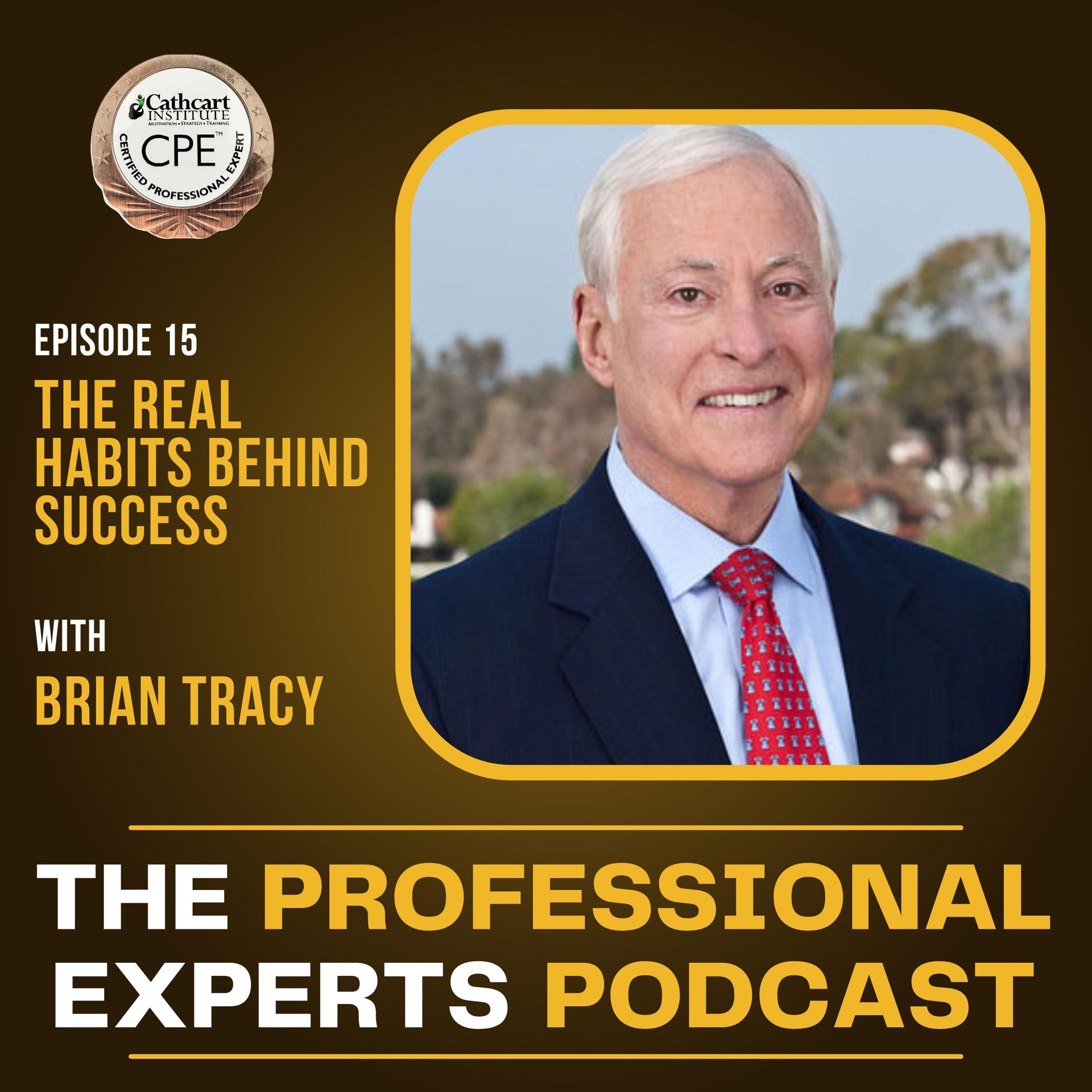
The Real Habits Behind Success with Brian Tracy
A conversation with Brian Tracy
About This Episode
Most of us know Brian Tracy as one of the world’s top experts on success and sales, but what really creates lasting achievement? Brian breaks down the habits that shaped his legendary career and why anyone can use them to reach higher levels of success. He shares how taking full responsibility, writing down goals every day, and following through with consistent effort can change everything. We hear how focusing on one key skill, finishing what you start, and serving others first builds both confidence and credibility. Brian’s message is clear: success isn’t about luck or talent—it’s about doing the simple things with discipline and purpose. If you’re ready to sharpen your mindset and lead with integrity, this conversation shows exactly how to get there. About Brian: Brian Tracy is a world-renowned author, speaker, and success strategist known for teaching the psychology of achievement and sales mastery. As Chairman and CEO of Brian Tracy International, he’s helped millions of professionals and entrepreneurs develop clear goals, sharpen focus, and reach higher levels of performance. With more than 70 bestselling books and hundreds of training programs translated into multiple languages, Brian has become one of the most influential voices in personal and professional development. His work centers on practical strategies that turn ambition into measurable results through clarity, discipline, and consistent action. About Jim: Jim Cathcart, CSP, CPAE is one of the top 5 most award-winning speakers in the world. His Top 1% TEDx video has over 2.8 million views, his 27 books are translated into multiple languages, including 3 International bestsellers. He is a Certified Virtual Presenter and past National President of the National Speakers Association. Jim’s PBS television programs, podcast appearances and radio shows have reached millions of Success Seekers and he is often retained to advise achievers and their companies. Even his colleagues, some of the top speakers in the world, have hired Jim to speak at their own events. Jim is an Executive MBA Professor at California Lutheran University School of Management and serves as their first Entrepreneur in Residence. He has been inducted into the Sales & Marketing Hall of Fame in London for his pioneering work with his concept of “Relationship Selling.” He is also in the Professional Speakers Hall of Fame and has received The Cavett Award and The Golden Gavel Award. Jim has written 27 books, hundreds of articles and he is always writing at least one new book. His most recent book is HI-REV for Small Business, The Faster Way to Profits . Audiences buy his books by the hundreds and he happily adds autograph sessions to his speeches. https://cathcart.com/ https://www.linkedin.com/in/cathcartinstitute/ https://www.facebook.com/jim.cathcart https://www.youtube.com/user/jimcathcart Tedx: https://www.youtube.com/watch?v=-ki9-oaPwHs
Full Transcript
Welcome to a thoughtful discussion of important ideas among people who are committed to succeeding in life. This is a gathering of leaders from a variety of industries, and our role here is to help you reach the top 1% of your field of choice. I'm Jim Cathcart. So come with me and let's discover how much more successful you could be. Well, welcome everyone to the Professional Experts podcast. And boy, do we have experts today. Today we've got not only the founder of the Professional Experts Academy, that would be Jim Cathcart, but we have one of the best known and most accomplished certified professional experts out of all 30 of them. And in fact, one of the most one of the best known and most influential names in the field of personal achievement worldwide, Mr. Brian Tracy. Brian, welcome to the program.
Thank you. Jim, you and I have been close friends. I still remind you that you spoke in New Orleans at an NSA meeting and talked about how you had decided to move to San Diego. And I, I was in living in Canada at that time and planning to move somewhere. And so I ended up in San Diego and you and Tony Alessandro, the first people I looked up.
And so we had lunch at George's Restaurant overlooking the La Jolla Cove.
Exactly right, exactly.
And, and man, you found the best location too. You bought a beautiful home in Loma Santa Fe at a time when Loma Santa Fe was still somewhat compared to Rancho Santa Fe. Now both of them are top of the food chain places.
Well, we've been fortunate. One of the things that I point out is people who are successful like you and Tony and myself, are hard workers. You know, when you come right down to it, you that's one thing that you cannot dodge is that successful people work harder than other people. And as a result, they increase the probability is the likelihoods that they will do the right thing at the right time with the right customers and so on. But if you weren't working your buns off, you weren't working really hard, then you would miss those opportunities. And that's why the 8020 rule is such a bench, because it comes back to bite you in the bum is 80% of people are going in circles, but only 20% of people earn all the money. And your job is one of them.
Well, thank you. And out of that 20%, there's an even smaller percent that actually really get things done and make a difference and leave a lasting impact. And you clearly are one of those. When I mention your name anywhere in the world, people instantly recognize it. You and I were in Poland at the Same time, years ago, and I was speaking at a conference to several hundred people. You were down the street speaking to a conference of several thousand people. And I had people in my audience asking me, hey, do you know Brian Tracy? And I was happy to report, yes, I do. And I'm a student of his as well. Now, I want to go back a little and review some quick history for the people that don't know our career paths. I mean, they'll know mine well enough from following this program, but. But I want to share yours. We were Both in the 1970s, trainers, you know, in the early 70s, just teaching other people success skills. Now, there's a special blessing that goes with that. What are success skills about? They're about ways to make life better. For whom? For everyone affected. So you and I have been in the business for a generation, more than a generation, for almost 50 years of teaching people the skills, the attitudes, the techniques, the approaches that have been proven for making life better in family life and business life and interpersonal relations and just life in general. And what a blessing to touch lives in that kind of a way. A lot of people have done that, and they've come and gone, but the ones with staying power that have the length of career that you have had, there's some kind of a defining factor that separates a person who's teaching good content from a person who is a vehicle for that good content. And the content constantly evolves, and the person becomes even more and more valuable to the world. What's your take on that? Same observation.
What I was thinking about, how I got started, and what happens was I started to read about success, Napoleon Hill and other people, and it opened my eyes to what was possible. And then I started to attend seminars, and those seminars opened my eyes. Pretty soon, those people were coming to my seminars, but I became so excited about these ideas for myself that I wanted to share them with others. And? And I've always had two loves. One, I've always loved the material, and that comes through. And number two, I've always loved my audiences. I've always wanted my audiences to get the same joy of learning and becoming what they call efficacious, capable, competent, able to achieve their goals and make more money. And so I have now thousands and thousands of letters that say the equivalent of, you changed my life. You made me rich. And including several yesterday on our podcast, you changed my life. You made me rich. What was it you taught me how to set goals, manage time, continually upgrade my skills, try new things. And that's the Greatest joy that we get in our work is to affect the lives of other people. But we have to care about them. And if you don't care about them, you know the old saying, well, if sincerity is the key, if you could fake that you can do anything, well, that good, good speakers really care about their audiences and they talk to them sort of like, almost like one on one, even though there's a thousand people and people get the feeling this person cares about me, about me being successful. And that's the difference. That's the top 20%. They really love the message and they love the people they're sharing it with.
Can you give listeners a sort of an overview of your career path? Because you, you did lots of things. I mean, you were an explorer, adventurer, a researcher. You were everything on the laundry list almost before you discovered this path. And then this path, you took it like a skyrocket at some turning point and have never turned back. So what from your point of view, starting out, once you had discovered this field, what were the stages or steps along the way?
Nothing is ever as simple as it looks. What happened was I had a gentleman come into my office. I still remember he was not very successful, but he was selling for a seminar company and the market was down. And he said, if you could put together a seminar, I could sell it. And I'd heard, you know, these people paying 3, 4, $500 for a one or two day seminar. I thought, well, I could get rich if I could do a seminar. So I sat down and I took all the very best material that I had and started with a two day seminar. And he was going to go out and sell the seminar. And I paid him a, a fee and he never did sell anything. And I ended up spending. You know, I used to joke that when I got into speaking, I learned how to sell again. I sold my house, I sold my car, I sold my furniture, I sold everything that I had and borrowed and, and I remember one of the first NSA meetings I attended, Patricia Fripp was speaking. She was the president that year. Yeah, we all love Patricia. And she, she said that it takes about seven years to be successful as a professional speaker. And nobody wants to admit that or accept it. And the fact is that when she heard it, she rejected it as well. But it took seven years to reach the point of professionalism, knowledge, skill, market knowledge, and so on to actually become successful. And that's only if you work your little buns off the whole time. So you never stop. So I got into speaking sort of like many people, you sort of back in and hit something, you know, to see what it is. And it's, it's now you've got to get booked in order to eat. And eating is a great motivation. Man, I lost everything and borrowed money from friends and relatives. And eventually after about. And Peter, Peter Drucker talks about this. After the first two years, if you're going to make it, you'll make it. At two years, you'll actually start to earn more than it's costing you to stay alive in the next two years, you'll pay back your debts from the first two years. And then at the year number four, you'll start to actually make money. And about the seventh year will recognize that you have succeeded. So always teach that. I've spoken to more than 500 companies teaching them strategic planning, but it's always two years to find out if you're going to survive. Forbes magazine says it all small businesses are a race against time. You're just racing against time. And everybody who's ever been successful knows what that's like is you, you look great on the outside, but it's like the duck that's
underneath the surface. Absolutely. Well, you know, that's, that's been true for me and everybody I've known in our peer group. Every one of them is an intensely disciplined worker. They don't, if they have spare time, even if they relax, they do it well. You know, I mean, relaxing is not just letting go of everything, it's letting go of what might be stressful and finding a way to renew and refresh yourself so that you're ready for more. And a lot of people consider, you know, the old concept of retirement. You work for an entire career and because work is a burden and life is hard, then you get to just do what you want to do, which is implied to be fishing and golf and playing with grandkids. But in 1974, in a seminar in Little Rock, Arkansas, Adventures and Attitudes, I did an exercise on goal setting and it said, when do you expect to retire? Now consider I was a 28 year old kid. This was 1974. I wrote never today. I'm 78 years old and I have no desire or intention of retiring in a traditional sense. I love my work and I kind of live for it. You know, I look forward to it every day.
Well, we, I feel exactly the same way. And all the people that we know feel the same way. We, we want to live what they say, fully engaged in life, fully engaged. We, we want to busy and getting up in the morning and doing more things and doing them better and, and that, that changes your life. As you know, this law of attraction very powerful is that if you have very clear ideas and goals and written plans, you attract into your life all the resources that you need to achieve them. And the, the other thing that is you and I are dedicated to is continuous learning. Continuous learning is always be upgrading your skills. Never coast. One of my favorite one liners is you never want to coast because you can only coast in one direction. That's true. So you always, you always want to be raising the bar on yourself. And in. There's a, a wonderful book written called Positive Addiction last century and was a very good book by psychologist what he said. Basically yeah.
It was the same guy that did reality therapy, William Glasser.
William Glasser, yes.
I heard him speak in Tulsa, Oklahoma. Positive addiction. Yeah.
And what he said was each time you do something, you release drugs into your system. Positive drugs, negative drugs. If you're angry or depressed or frustrated, then you release negative drugs. If you do something positive, you reduce positive, you induce positive drugs. And if you do it over and over again like a dope addict, you become addicted. And the most wonderful addiction is toward accomplishment is to be achieving things that are valuable and important. And if you don't organize your life as 80% of people don't do, if you don't organize your life, then you'll be behaving randomly. 70% of work time is wasted in the world of work today because people just sit around and talk and check their phones and read the newspaper, go for long lunches and so on and they don't understand why they're not getting ahead. But the fact is that when you do something, and this is the wonderful thing, it's called task completion. When you start and complete a task, it gives you a rush of endorphins and dopamines and they make you feel happy. They're called nature's happy drugs. And this is what Glasser said. If, if you want to get addicted to being happy all the time, then do things that have a beginning, a middle and an end. And task completion is the key, is not just 95% souls. And Nitson wrote that, he said many people only go 95% of the way and they don't complete the major project or the book or the, the business or the weight loss program is they, they put off that last little bit. And it's the last little bit that gives you like the dynamite detonator gives you this Wonderful.
Seated by a time that feels like it's not working. You know, there's always that, that gap in there. I used to do sales campaign once a year for an insurance agency that I consulted with. And we had a fall push for five weeks that we call quota buster, but you know, breaking your quota and selling more than. And we would have a big preparation period in the summer and then we'd have a exciting kickoff and then a real sales push for a couple of weeks. And then there was always a mid sale slump. And so we planned new events during that traditional slump time to reignite everybody and then we'd finish big and then we would, instead of only celebrating at the end, we would have a follow through campaign. It's like I was in charge of a big fundraiser for the Boys and Girls Club one time at the Reagan Library, Ronald Reagan Presidential Library. And we had 409 people raised about a quarter of a million dollars that night. And at the end of it I told my team of volunteers, I said, you are now on a new committee. They said, well, we're done. I said, no, we're not done. You're on a new committee, the gratitude committee. What? I said, yeah, we've got a, about 409 people to thank and we need to do it until they feel it. So your job's not to thank people, it's to thank people in such a way that they actually feel your gratitude. And that way we've, we've already got a head start on next year's fundraiser. Yeah.
And the speaker, I was outselling my two day seminar and it was a recession and people said, well, we really like motivation but we need sales. You've got to, we need more sales. And you know, the, the rule is that business success comes from high sales, business failure from those sales. So I said, well, yes, but this will really motivate people to go out like, no, no, we need specific sales material. So I said, oh well, all right then buy gum, I'll do it. And I sat down and I wrote a one day program. Nightingale Conan, after my first program, said, could you do something on sales? Because we like to do one program on sales every year. And I said, sure, I've been in sales 20 years. And so I designed a program called the Psychology of Selling, which is today in 45 languages, the best selling program in history. And more people, according to research, have become millionaires practicing the psychology of selling. Well then people walked into my office and said, if you've got a seminar, we could do that. We could sell. And so I ended up with teams of people all over the country, independent, who would go into a city and sell 500 to a thousand seats. And I would come in and give my one day seminar on the psychology. And one of the things that I learned very early in my career, which is really so important, if the client said you want $3,000 to speak, I mean, what if you're no good? I said, I said. Then she said that to me, I still remember. And I said, well, if you're not happy, there'd be no charge. He said, well, if you would speak on that basis, then we'll hire you. And so for the rest of my career, unconditionally guaranteed success or satisfaction. If you're not happy, there's no charge. I began to sell programs from the stage and I sold millions of dollars worth, actually. And it was so excellent because I would say all these programs are free. And I'm telling, I'm mentioning this to our friends because many people become millionaires with a simple technique. As I say, they're all free in that you can take them, use them, try them out. And if you're not happy for any reason, you could have your money back. And this guarantee does not last just until you get back to your car after this seminar. This is for one year. So you can take them, try them out, use them for a year. If you're not happy, no charge. And so they're not only free, they're free plus a profit. And this is one of the most important things I've taught to corporations all over the world is that the benefits that people get from using your product or services should be well in excess of a cost. And, and they are. I mean, that's why people will buy them, because they expect to be better off rather than worse off. And so that became my leitmotif, if you like, if you're not happy, there's no charge. Now it's your job and my job to make sure that they're happy.
Absolutely. Yeah. That puts, that's that self imposed pressure. And it's the right kind of pressure because it's saying, I care so much about doing this right and doing it well. So there's a value to you, that I will put myself at risk.
Yes.
In the event it doesn't pay off. And then there's a variable because a lot of people will say, so if I buy this and take it home and my husband or wife says, no, you know, don't do that, then you're going to give me my money back. That's not the deal. The deal is you apply the ideas. If the ideas don't work for you and you don't make a lot more money than you spent, then happily give your money back. Yeah, so it's not, you know, that's the thing. It's not for lazy people. This is for serious, serious aspiring achievers. If they want the path to success, you've studied it enough and laid it out in so many different ways that it's there for them, but they have to take that journey.
Yes, well, one of the things that, that I found was that if you give the programs to people without charging in payment, they will look for ways to justify giving it back. If you charge in advance, they will look for ways to not justify giving it back. So it's a very subtle difference. And you give them a year. So look, you have a year to decide. If at the end of the year you're not happy, you can send them back. We used to get 1 in 400 back. 1 in 400 because. Because the programs were really good quality and people got results and people became successful. And that's, that's our job, is to help other people to be more successful by sharing our ideas.
Yep. Well, I think the. When you look at the stages in your own career, there was Brian the trainer, and then selling seats, buns in. In bleachers, right. Putting people in chairs, selling one ticket at a time. And then there was booking events, and other people were selling those, and they were paying you to come in. And you would either come in for a low fee or for. For, in some cases, no fee, I think, because I certainly did at first for the opportunity to offer my training programs. And I would make way more money from selling the training programs than I did from whatever fee they might have paid me for those events back then. And as you said, you've sold millions, literally millions and millions of dollars of your training programs around the world, and you've also been paid millions and millions of dollars in speaking fees. So both ends of that have paid off for you phenomenally well. But I want the viewers to notice this. That's only because the people who heard Brian's message and followed his suggestions have done well. You know, if you want to be, you want to live an abundant life, all you got to do is help enough other people live an abundant life. Like Zig Ziglar used to say, you can get everything you want if you help enough other people get what they want. And that's exactly What Brian's been doing for his entire career, helping enough other people get the things that they want. Now, Brian, you've got two Alphabet soup items. You've got. And then you've got SMS. Could you tell us about those two?
When the COVID hit, I just hit 75 years old. And so I decided, well, since the industry is being wiped out speaking industry, you can't get people in a room legally anymore. So I decided, well, I would retire and focus more on writing books and things like that. And then I got a phone call and they say, we want to book you for five talks. Jeez. I said, don't you realize it's illegal now? You can't put people. Oh, no, no, we're going to do it by Zoom. We're going to do Zoom seminars. Well, that was my, that was five, six years ago. I do about between two and six Zoom seminars every month. I do them all over the world. I speak to thousands. And one, one, I spoke to 18,000 people spread across six countries. And my clients who booked me, they pay me because I can do it here, like I'm speaking to you is so therefore I spent several thousand dollars on a nice computer. So I have great picture and so on. And so I've just been working at home most of the time. And of course Covid is over and I've been out speaking a little, but mostly just like this. And then I began to write more books because I had more spare time. I'm now up to 96 books
that I remember. You know, at first your business model was trainer, and then it was speaker and trainer, and then it was audio producer. You know, an author doing audio programs. And you were exclusively audio. I remember recommending one time that you write a book and you said, I don't need to. The audios are working for me. And now you've done more books than anybody but Isaac Asimov. I think you're like one of the world record setters on the number of books you've published and of course the people you've reached. But beneath all of this, I'm saying this for our viewers, is Ryan's expertise is what he's selling. And he's not selling books, he's not selling audio programs, not selling training, he's not selling consulting, he's selling the effect of them. It's the ip, the intellectual property that each contains that can be used by other people to make their own life more abundant, more successful, more satisfying, more safe. That's what people are paying for. And that's why there seems to be an endless demand for what's Brian Tracy got to say now? I'd love that.
Question is always, does it work? Does it work? So you have to be judicious. In 1970, I sent away for a subscription and I got a book as a gift called Human Action. And Human Action is written by the Austrian economist Ludwig von Mises. And that was in October 1973, because I remember I was on a business trip, I was in the motel and there was nothing on television. So I started to read this book. It's 800 pages and I've never been the same again. Because what he explains is that all of Human Action is aimed at improvement, is that everything that we do is to be better off than if we had not acted, because we won't act. I'm sort of like a face slapper, if you like, wow. And then you realize that all successful business, it's very focused on entrepreneurship, is finding people who have wants and needs that you could help them to accomplish in a cost effective way and better than your competition. And that is really the key to it. And I, I began, I buried myself in, studied economics for the next few decades and I joined several different international organizations on economics and so on. But one of the things I learned is that if you want to be successful, the Earl Nightingale used to say that the most important word and success is deserve. And deserve comes from the Roman, the Latin de zerbus, which is from service. So therefore, if you want to be successful, you have to serve other people to help them improve their lives or work in some way. And every business I say there's three factors that determine your success and they all start with the word C. And the first is competition. And you have to be superior to your competition. And the second is competition. And the third is competition is everything in life is basically what we call jumping over the previous one. The defrogging is you have to be, get better and then better and then better. And you can never stop getting better. And that's the big difference between successful people like you and our good friends is they're continually learning. They're continually reading and listening and going to programs and asking questions and so on. And so anyway, why I written so many books, I wrote my first book and I had a publicist and the publicist went out and brought me appointments to do interviews on radio, television, written interviews and so on. And after about 90 days, the interview stopped. And I said, what happened to the interviews? Your 90 days is up? Yeah, my 90 days is a. Well, you get 90 days. And then new books come along and they publish itself to promote those books. I said, well, how do I get more interviews? And I still remember her saying, write another book. And I said, okay. And so I decided I would write four books a year for. Indefinitely. I wrote four books a year for 22 years. Wow. And wonderfully enough, the book sold. And if your book sell, then they, they have a tracking record. Every publisher in the world can tell you how many books you've sold in any hardcover, soft cover language, anything else. And so if you say my name is Brian Tracy, they'll go, let's talk. And so now I have several publishers all over the world that publish my books and they don't get a lot for a book. You give me a $1 $50 for a book. But if you sell enough books, it's enough $50.
You'll get a kick out of this. I got a royalty the other day from Simon and Schuster on a book that Tony Alessandro and I co authored back in the 1980s. Relationship selling dollars 96 cents for six months of sales. Other books are doing fine, but some of those older books, you know, they, they're still out there. And some person in some remote village on the other side of the earth finds it and buys it, you know, keeps it alive.
That expression, you know, what's your next miracle? You wrote the book which was non manipulative. Selling is a. Was a very good book and full of great ideas and it's one of several hundred that I read in developing
Julie Alessandra and Phil Wexler and how we met actually. And so he and I wrote. Wrote a book on being your own sales manager. And then I wrote Relationship Selling which. Which you have a copy of for sure.
Yes.
Yep.
Forgive me if I.
No, that. Well, you know, so many of us and Tony and I have worked so closely together for so long that it's easy to, to. To see how that, that came into the file. So. Mmm. Is make more money, make more money. And SMS is sell more stuff. Okay. Make more money, sell more stuff. The story, everybody wants both of those.
The story that I started is people called me up and said, we'd like to book you for a zoom seminar. And it was like some sometimes movie theater size screens where I'd speak to 2,000 people. And I still do. I can stand elevations and. Wow. And so I said, well, what do these people want me to talk about? And of course that's the first thing you do when you interview your client and we would work this through. And they finally realized, well, the people who go to these meetings and pay and travel and so on are entrepreneurs. They're entrepreneurial, they want to do better in life, they want to make more money. I said, so if you, if whatever subject you speak on, what you do is you hook it back into. And by the way, if you do this, you will get better results and make more money. And so how. But how do entrepreneurs make more money? They sell more stuff. So you. Mmm. By smse. And so every talk that I do, and I've got about 30 different seminars that I've developed with notes and handouts and everything else that are loaded online. And it's always, and by the way, if you do this, you will make more money. And that makes people very happy.
Yeah, and you prove it. That's the thing. All your, you know, all of your ideas, you. They're filled with examples of actual practical proof that they work. Some people in our field are philosophers and they just think out loud. And the way they do it is impressive enough that people want to hear them. But you're, you're beyond that. You know, you're a philosopher, of course, because you've studied all these different schools of thought over so many years in so many different fields. Of course you're a philosopher, but you're a practical philosopher in that you show how people can use it to make their life and the world a better place. And that, I think, is the key. And I like that. I like to hook everything into. And this is because it will make more money. Here's an example. And you'll sell more stuff. And here's an example. I like it. Good on you.
If I could. And I always treat an audience like I would only speak to them once. And this is, I'm speaking to your friends. Imagine I'm only speaking once. There's three, three parts of what I call my golden triangle of success. And by the way, there's a separate triangle of speaking success. But the first or first of all, number one, is to accept responsibility for your life is to say, I am responsible. I am responsible. I am responsible. Those are magic words because we find that the opposite of positive emotions in life is negative emotions. Negative emotions are the source of all unhappiness, illness, bad relationships, everything. So therefore, how do you eliminate negative emotions? The answer is that all negative emotions, this is one of my researching, are based on blame is you blame someone else for your problems. They say that most people in their 50s are still working through their Problems with their parents. They're still their parents, they're still irritated, they're still depressed, they still, oh, if you knew what my parents did to me and didn't do to me and so on. But the thing is, if you just say, wait a minute, I'm responsible. I may not be responsible for what happened, but I'm responsible for how I respond. I'm in charge of my own life. This is number one. Number two is goals, is write down your goals, decide exactly what it is that you want to accomplish. And goals that are not in written are like cigarette smoke in a large room. They just basically fade away. And so where I learned this many years ago, I was sleeping on the floor of a friend's tiny little apartment and going nowhere and no money. I, I said that the very best way to lose weight is to go into selling without any training because I lost about £20 in my first month or two in selling because I didn't make, I couldn't eat, I mean I was. Anyway, so I, I, it said if you want to be successful, you have to have written goals. And so take a piece of paper, write down 10 goals, which I did. And within 30 days I'd accomplished all 10 of them. It was like a miracle. To this day I just couldn't believe it. My income went up, my weight went down, my, my own apartment. It was just amazing. And the third is continuous learning. So golden triangle. And now one of the things which I teach people and some of the stories I've heard are just phenomenal, I'm going to share it with our friends here.
Okay.
Came here from Ukraine last month and she came with three people, totally video camera, photographer, audiographer and so on. And she wanted to spend, paid several thousand dollars for a two or three hour interview with me. And she told me her story. She had been living in Ukraine three years before and she was earning $500 a month. And this year, three years later, she earns $500,000 a month in Ukraine.
In Ukraine, in a war torn country.
Yeah.
Wow.
And she, and my, my agent, my good friend who arranged and set it all up, he said this woman is phenomenal. She's just broken every record. She's respected throughout the entire country, all over Europe. I mean, it was just phenomenal. So she came in, she said, Brian says, before I say anything, I have to tell you why I'm here. She spoke quite good English, 39 years old, name is Maria, married, two children, and obviously she's doing well. She said, this is what happened. My Life was going like this, but all the problems in Ukraine and then
I got to drain right.
On goals. And in that book on goals, there's this exercise. I took this aside so I could show it here. Yeah, there's an exercise which I began teaching my clients many years ago. And it's very simple. I say, if you want to change your life, become rich, happy, thin and impressive, is take a final notebook like this. What you do is you open up to the first page. I learned this, by the way, when I was about 20 and forgot it and relearned it and relearned it. What you do is you take and you write the word goals in today's date. And then you write down 10 goals in the present tense as though they already existed. So like I earn, I weigh, I achieve, I accomplish that. And then tomorrow, take your spiral notebook and turn to the next page without looking back. This is the key. Turn to the next page and then Write down your 10 goals again. And do this every day for a month. I used to have a coaching program and people, I've charged them $5,000 to come and spend four days with me every three months, one every three months. And people say, well, it's $5,000, a lot of money. I said, well, I'll give you a double, double guarantee. If you don't double your income and double your time off in this 12 month period, I'll give you money back, no charge. And they said, okay, on that basis, I'll sign up. And I had a very successful coaching program, about 30 people at a time for about seven years. And I put a thousand people through that course and I never got a request for a refund. Every single person doubled and tripled their income, usually within 30, 60 days.
Does it work? It reinforces what you said earlier, which was when you pay a substantial payment for whatever it is you're going to use, you use it because you're trying to justify, validate that investment. And if you didn't pay for it, if they said, hey, you know, I'll give you a free ride and when you start making money, pay me, then they're, they're going to be second guessing it, they're going to be not showing up for meetings, a whole bunch of other things. Yep, completely different behavior pattern.
So what I, what I said, just write down 10 goals and do it every day for a month. And after that you'll probably do it every day for life. My office here, you can't see it, but full of shelf after shelf of spiral notebooks. And go back decades. And does it work? Well, you've seen my house. It's not a bad little house. Looking over the golf course and PG Speaking to the ocean, if you like. Anyway, so those are the first two things is responsibility. Write down your goals and then every day work on your most important goal. Do the one. And there's a, there's an exercise that I teach. And by the way, if we have speakers watching this, they're public domain. Any of these ideas that you ever hear from me, it's public domain. You can take it and, and don't, don't give me any credit. Just take it and say. Just like you used to say in, in speaker's round table. Well, that's a, that's a very interesting story. I wish I'd said that. But tomorrow I will have. So you, you say take care.
Very generous of you. Yeah.
And say take this. And then I just tripped over myself there.
Oh, you were, you were talking about how it.
Magic wand. Magic wand theory is where you take and imagine a magic wand. And I used to do this for large audiences. I say, I take a gold pen. I say this is like a magic wand. And I want you to imagine that you could wave this and overnight become absolutely excellent at any one skill. What one skill will help you the most? To achieve your most important goal? What one skill? And write it down. And then I'd have them discuss it with each other. This is one of the surest ways to become wealthy, is to identify the most important skill. And when I was struggling, my answer was closing the sale is that I was knocking on doors all day long up till 9:30 at night, if you like. If the light was on, I would knock and. And I wasn't making any sales. And so I realized that if I was good at closing sales, then I could earn vastly more. So I began to study. I called the full court press, full court press on. On closing the sale. And eventually I written books on it. Now I've lectured to thousands of people even more. And people become wealthy learning how. Not tricky, no. No pressure, no tricks. Just asking people to make a buying decision in a professional way. And those things are so powerful. So decide what you want, decide the one skill that will help you, and then work every single day on that one skill until you master it. And it will take a while, sometimes a week, sometimes a month, sometimes a year. But you'll never regret having dedicated yourself to mastering a critical skill for your success.
And the people that argue, well, I want to balance a Number of skills. If you focus on that one, like Brian's saying, the rest of them come along for the ride. You pick up in the process of doing that, the peripheral skills of being better organized and more focused and more articulate person and more likable. And all the other things that lead up to getting someone to say yes. When you seek to confirm a sale. Yeah.
Yes. Well, it's so important if you see yourself, I tell my audiences, see yourself as a helper. Your job is to help people to improve the quality of their lives in some way.
Absolutely.
And in your particular way, if you restaurant, that's you're. You're helping people to enjoy the experience of dining. If you're anything, your job is to help other people. And this is what I learned in economics. It's the most wonderful thing about the free market and about our market in our world is that anybody who has an idea to serve people better can create an opportunity for themselves. And then the next. The next thing I always say is, but you want to fail over and over again before you find the way that works. You'll stumble here and fall down there and make a mistake and lose money. But the failures are indispensable to your success. All successful people are professional failures, I said, not amateur failures. They're not once in a while failures. They're professionals. They fail all the time. Until finally there's one little point that says that there's a certain number of failures between you and becoming a millionaire. And that's one of the things that I focus on, is somebody has to become a millionaire. There's 26 million of them in the U.S. you might as well be one of them. So there's a certain mistakes that you have to make before you learn what you need to learn. Critical mass. And you can become a millionaire. And so you never know how many mistakes away you are. It may be just one more mistake.
Yeah, that's a great way to think about it. You know, think like there's 1,642 mistakes needed for me to get to the level that I want to be at. My impulse would be, bring them on. Let's get them over with. Next. Yeah, that hurt. Okay, next. What are we going to do now?
Well, I remember Ross Perot was running for office. He said that you were probably only one major mistake away from great success. And he said, that's not the time to quit. That's when most people quit. Their business goes broke. Anybody who's ever failed greatly and come back says afterwards, it's the best thing that ever happened to me. And so I learned so much that no such thing as failure, only feedback.
I got a bit of trivia for you. Ross Perot ran for president against Bill Clinton and George Bush Sr. And he was the spoiler, but he was super, super popular, and he was filling stadiums all over the country. I went to hear him live in person at the Del Mar Fairgrounds, which is about, what, two miles down the hill from where you live, Brian?
Yes.
Yep. So I heard Ross Perot live that way back in the day. Man.
Well, I heard him speak when he was. Before he ran for office. He was talking about why he was successful in business and his entire focus. He had this idea that he was the top salesman for IBM in the United States, and he was earning more money than the president of IBM because he was on commission. And they came out and they said, well, can't have this. Can't have sales earning more than the president. So they cut back his commission dramatically. He said, well, how am I supposed to achieve the level that I'm accustomed to? Well, that's your problem. So he said, well, the heck with this. I'll just start my own company. And one of the things he saw an opportunity is that people needed the equipment, but they didn't know how to set it up and operate it. So he keeps it up. A business called. What is it? Was this. It was called. Was it Perot Systems? But it was.
I. I remember that I knew it, but I don't recall what the name of the company was now. But that's, you know, that they said, we can't have this salesperson making more than the president of our company. My question would be, why not? Why not have all your salespeople making more than the president does? And the president can get salary increases every year, man, you know, that's the wrong way of looking at equity. The. There was something that occurred to me a moment ago that I wanted to. To ask you about, but let's shift from mmm to sms. Sell more stuff.
Yeah.
Is there a distinction in those two different.
Well, the. Our friend Jay Abraham has done some really good work on what he calls risk reversal. And his contention is that in every decision that you make that requires time or money or anything else, there's a certain amount of risk involved. And so the question is, who bears the risk? Is it the customer bears the risk, or is it that you, the supplier, bears the risk? He said the key to success is risk reversal, which is what my closing method was, was there is no risk, there's only benefit. If there's no benefit, there's no cost. And so what as you. You point out that by doing business with me, there was going to be no cost to you unless you are successful, unless you earn much more money back than you get. And I worked with IBM in the 80s as a speaker, which is a great opportunity for me. And I studied them very closely, and they had 82% of the world market for computer. 82%. It was just a phenomenal company. All marketing. Thomas J. Watson, Senior Junior. These guys are just marketing people. That's all I thought about was selling all the time.
Anyway, he had that. Had that. What do you call it, A little badge on his desk that said think.
Yes.
Remember that? Yeah.
Every wall of every office, think. And here was their technique, by the way. And their technique was one that I adapted. It was. They would say, we would like to come in and look at your business and then make some recommendations and show you how you can be far more efficient and more profitable. And so the. They started off like a doctor's examination. They would do a careful examination. Then they come back and I say, let us show you what we have found. And they would show that if you paid this 100,000 or millions of dollars for IBM computers, that in two years, three months, and one week, it will pay for itself. And then it will go on paying for itself for another 10 years, coming back at 100%. So what decision would you like to make? The question was always, how fast can you service? Well, that's risk reversal. Yeah, risk reversal. So what you want to do is take away the risk by accepting it on yourself. And that's why I was successful in selling. And I taught these techniques, by the way, to thousands of salespeople, and they went out and became millionaires. They couldn't believe it. They were so clear that if you're not happy, there's no charge. In other words, our products are free plus a profit. And that's what everybody should be offering anyway. So that. So we'll always guarantee satisfaction. If you're not happy, then there's no charge.
That's the way to sell more stuff. Well, we're coming up on a time crunch here, so in the few minutes we have left, I want to. First off, thank you for wanting to be part of the Certified Professional Experts group. We now have 30. The latest one I bestowed on Dennis Whateley posthumously. So sad that we lost him as a colleague and a. And a dear friend recently. But 30 people have now received the Certified Professional Expert designation. And I had a few right at the first that I selected because they were exemplary role models that the rest of the world could look at and say, well, that's what a professional expert looks like. I want to be one. So it's yourself and Les Brown and Patricia Fripp and Tony Alessandra, Ivan Meisner, people like that. And then a number of other people have enrolled in the Professional Experts Academy with me and gone through the mentorship. And then at the summit, I bestowed the CPE on them. So I just want to thank you for being part of that. And a double, triple, quadruple. Thank you for making the time to come to the. The Professional Expert Summit in La Jolla, all three days and all of the events, and to be present and, and to be there just, you know, just glowing and having your effect on the atmosphere, as well as making comments from time to time. Because people have said to me a number of times, and I know they've said it to you a thousand times, I'd love to be a fly on the wall when you and your colleagues are talking. Well, that's what we're doing right now, is giving them that fly on the wall window into what people like us talk about, think about and care about and what techniques we've used and shared with, with other colleagues to get to the next level. So for. I know you're not seeking new clients, but you're certainly open to them. How do people best find Brian Tracy when your name is everywhere? If they want to get in touch with you to talk business sometime, just
go to Brian Tracy, briantracy.com.
really?
Yeah.
Okay. Well, that's.
One thing I wanted to leave you with. And I was. I've written a book, my most recent book. It's called the 32 Unbreakable Laws of Money and Success. And it's. In my entire year of entire lifetime, I've summarized these universal laws that go back 350 years before Christ, from Aristotle. And the 32nd law was going to be 32, 31. But the 32nd law is called the law of Reputation. And I say that the law of reputation largely determines your success or failure in life. And your reputation in business is branding. How you branded is what do people say about you and your business after they have done business with you? What are the words that they use and what are the words that you want them to use? And with regard to your organization, what you're doing is you're offering people an opportunity to improve the quality of their Reputation, their brand. Because they, there's, there's a little one liner that says that if you. Why is it that people buy from one person rather than another? And usually it's because they're recognized as authorities in their profession. And what are the first six letters of the word authority? And the answer is author. And so you'll find that the reason people will hire you, our friends who are watching rather than someone else, is because your reputation is superior. People talk about you in positive terms. They say good things about you when you're not there or after they deal with you. So what you are doing now at this young age is by establishing this organization is extremely helpful to people to become certified professional experts is to become, to increase their reputation so that people can buy from them more easily, more rapidly, they can pay you more, they can use you again and again and speak well of you to other people. So I want to congratulation and thank you for what you're doing.
Thank you for that. I, I had the joy of having a client after a coaching session the other day, say to me, and the coaching session was the completion of our transaction. He said, hey, I want you in my life. I thought, wow, that's as high a compliment as I can imagine. He said, how do we do that? And of course, I showed him several ways that we could structure that, that made sense for both of us. And, and so now he's an ongoing client of mine. But you're right, you know, it's, it comes back to Earl Nightingale. What I got from him, from the thousands of hours of listening to Lead the Field and all the other recordings was one clear message. Develop in yourself the qualities that the person you dream of being would have. And as you acquire those qualities, all the goals you're seeking will become your natural byproduct.
Yes.
So become the kind of neighbor you'd like to have, the kind of parent you'd like to have, the kind of boss, the kind of spouse, the kind of friend you'd like to have. And as it says in the Bible, the rest will be added unto you. Yes, yes. Well said. Well, thank you, Brian. You, You've blessed us all today and we're right on the top of the hour, so your timing is perfect. Thank you. And I just genuinely treasure this friendship and I appreciate the time you've given us today.
Thank you, Jim. It's a pleasure, it's a pleasure to be with you, all of our friends and good luck. May this be the best year of your life, except for next year.
Outstanding. Thank you, sir.
Thank you.
Thank you for joining us today. If you are committed to making more success happen in your own life, go right now to my website, free.cathcart.com and download my free ebook and then watch the video. If you decide that you'd like my assistance in helping grow your success, then come with me and let's discover how much more successful you can be.
Nurture Your Nature.
Never Miss a Conversation
New episodes drop regularly. Subscribe on your favorite platform and never miss a conversation.